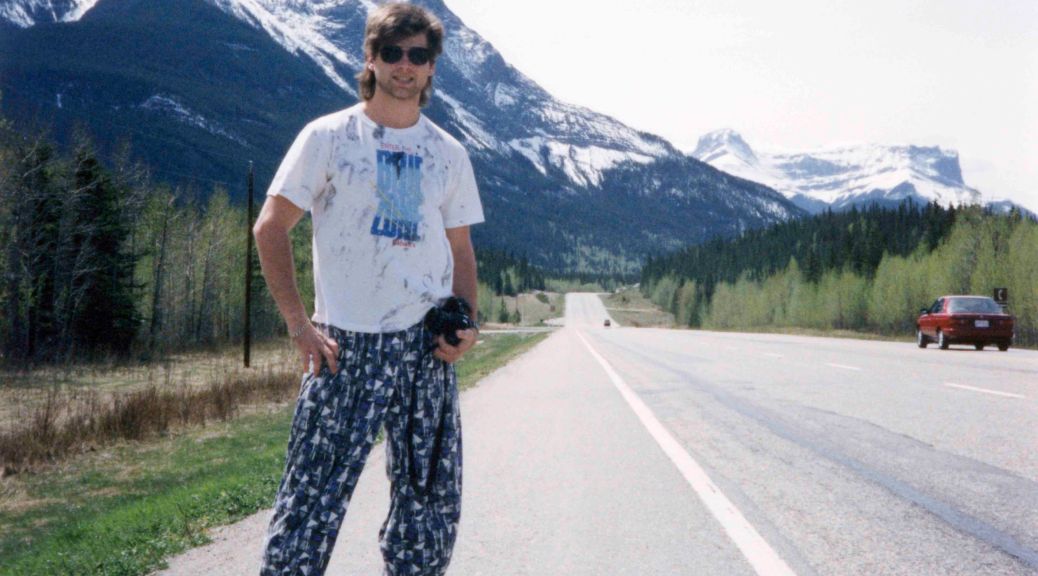
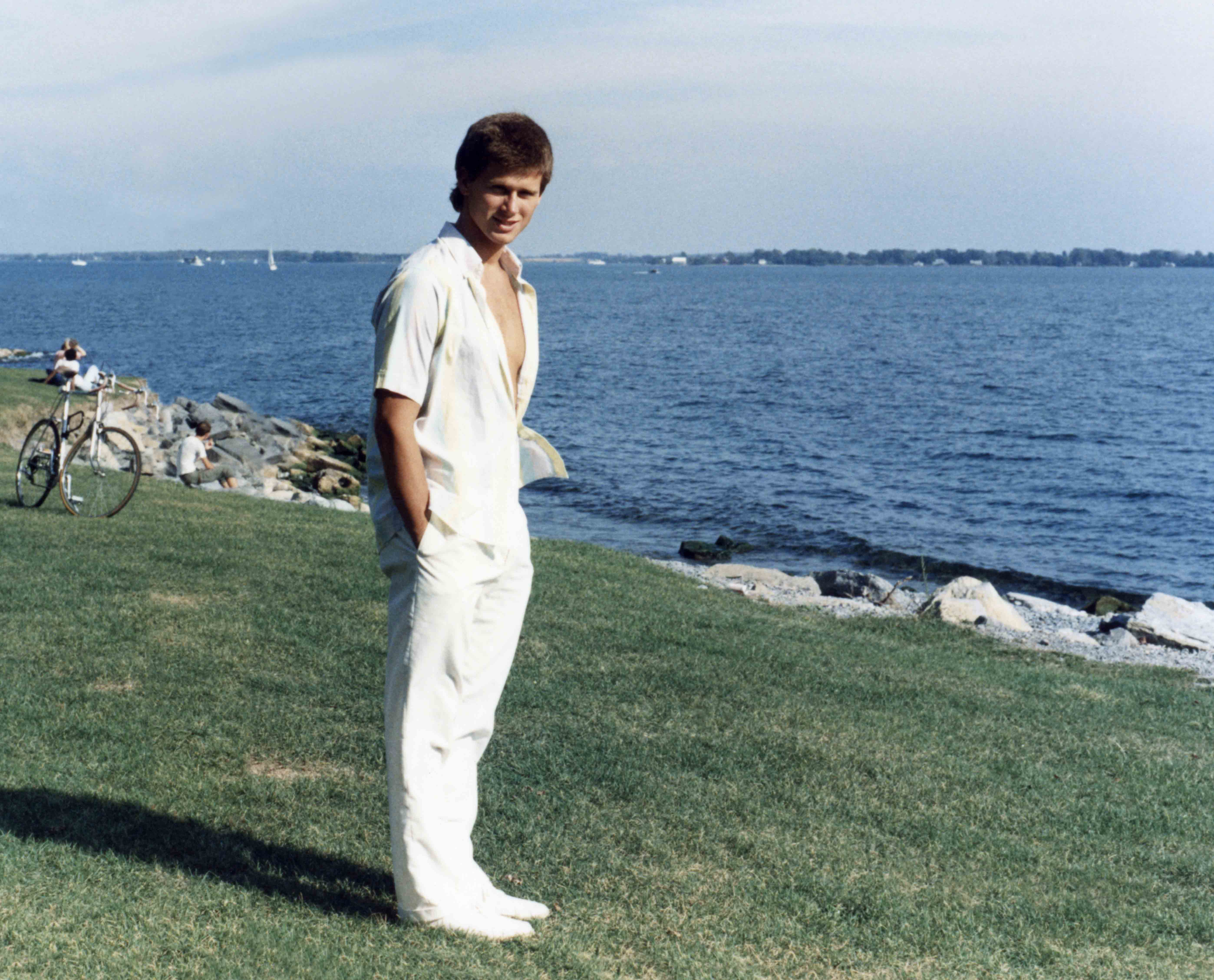
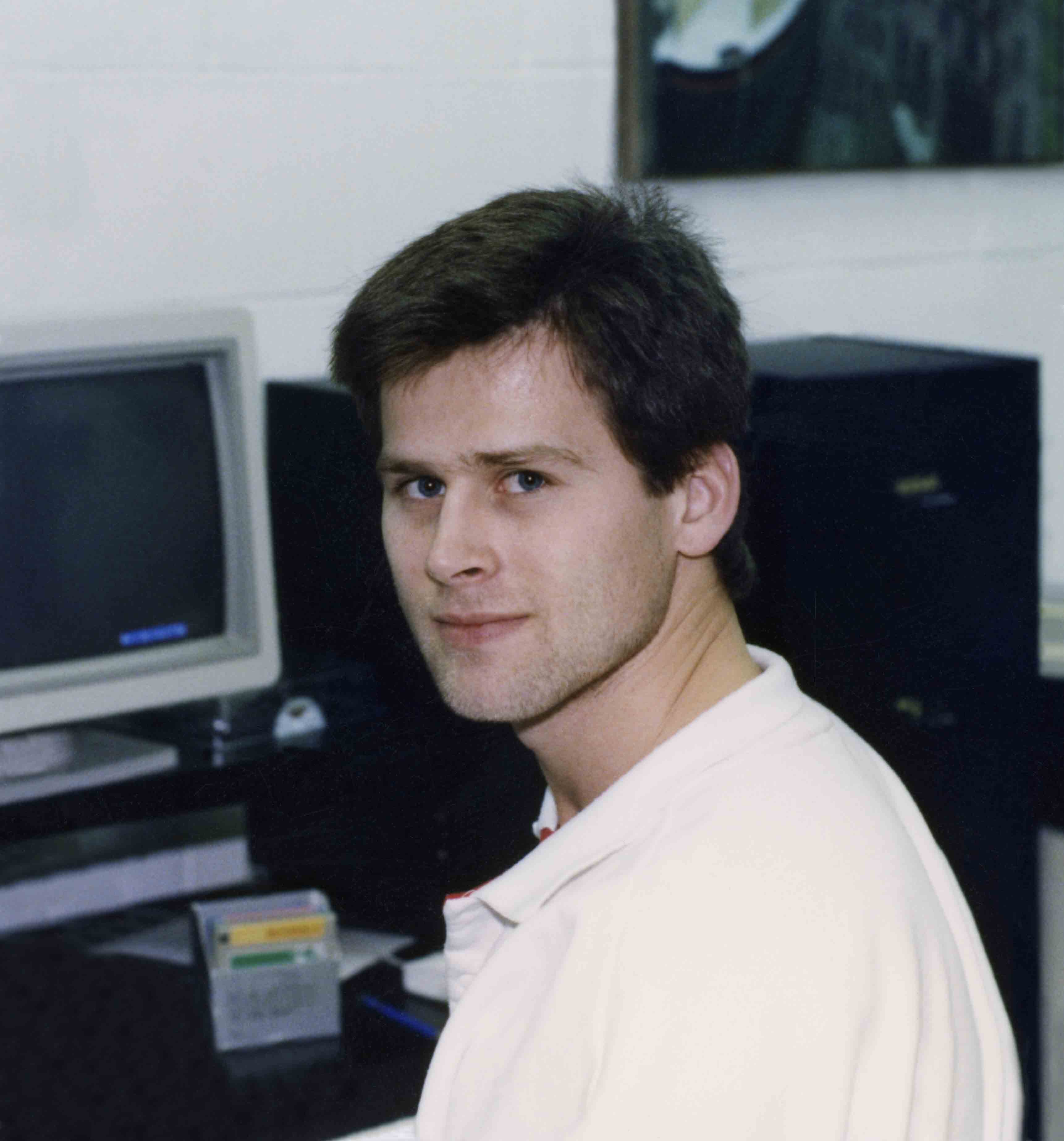
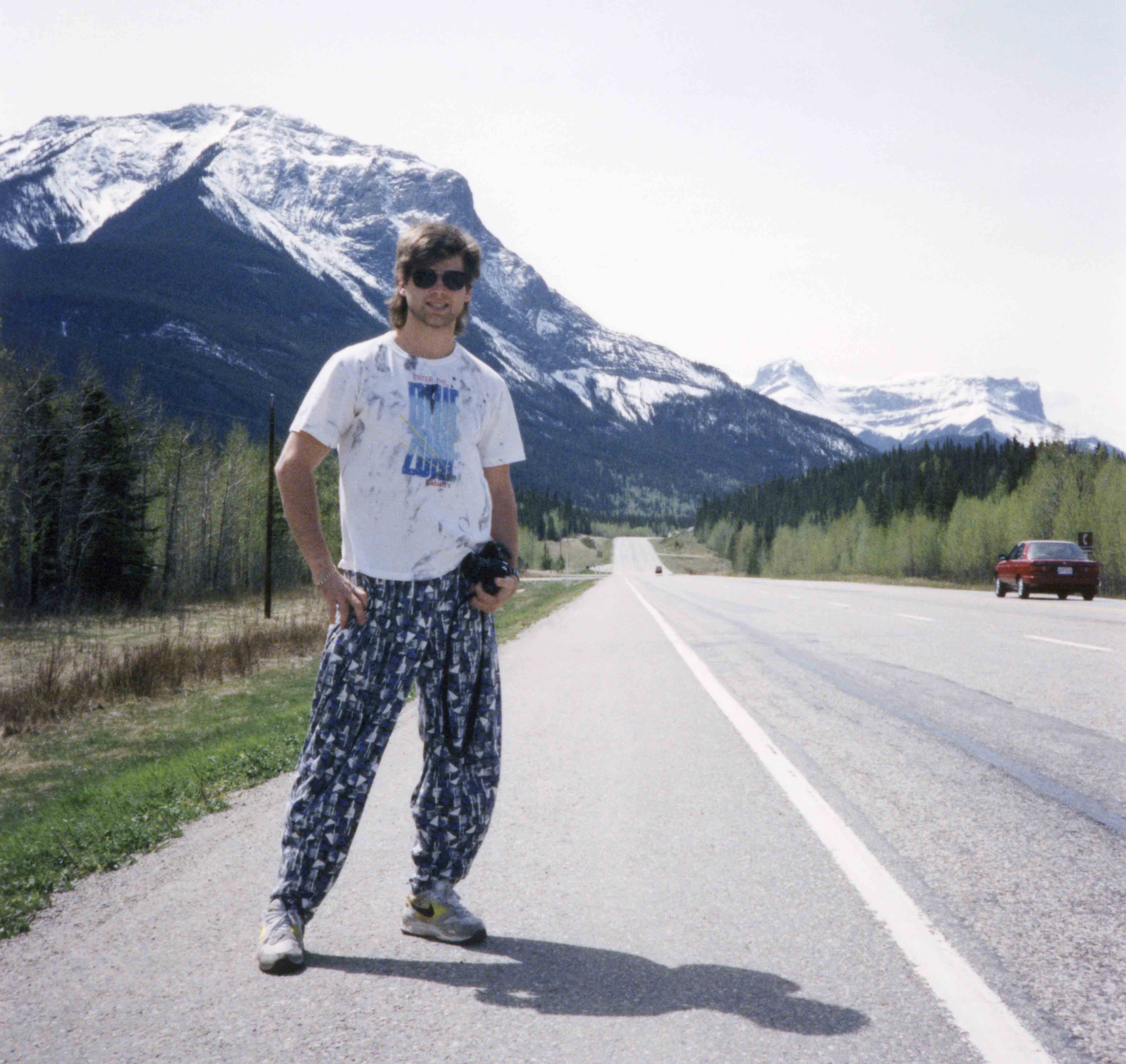
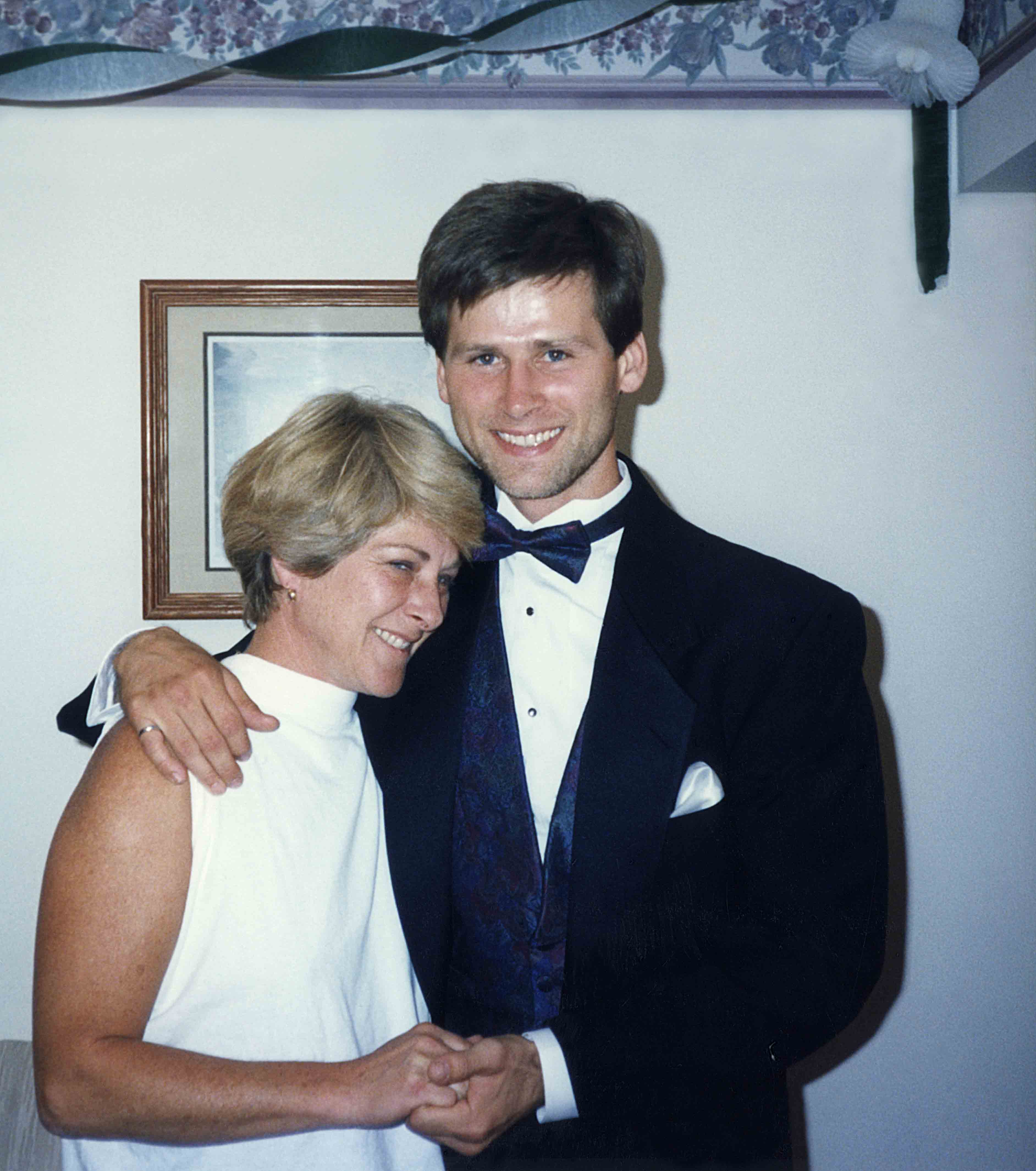
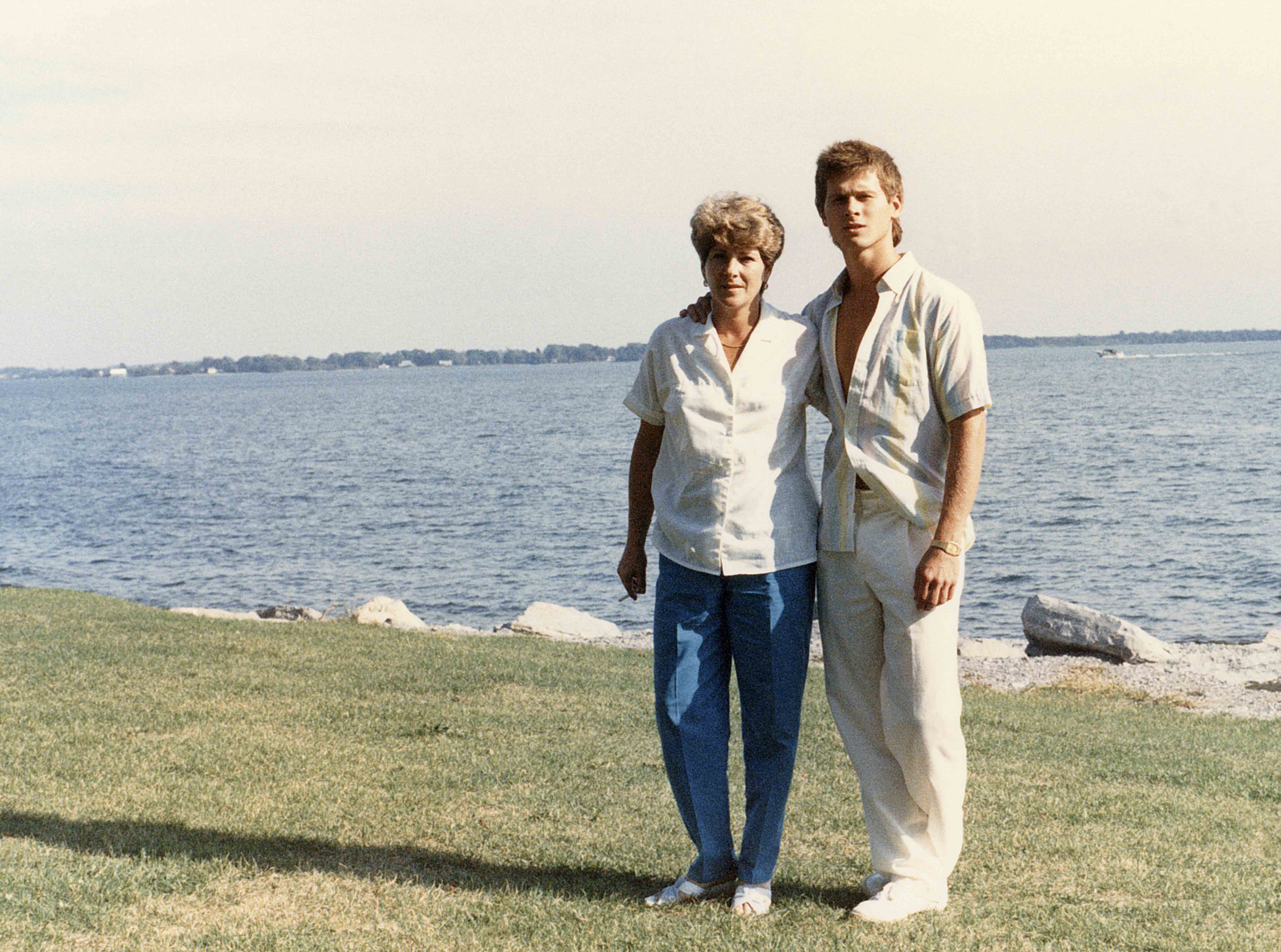
• After graduating from university I treated myself by visited my friend Robert Fridrich in Prague. He had arrived two years earlier to teach English. By the time I visited in June of 1991 he was starting Mac Source, an Apple reseller business with two partners, Tony Hasek and Glen Emery. I witnessed how the market was developing and the opportunities to make a fresh start. My challenge as a fresh graduate was entering the workforce in the middle of a North American recession. After struggling for over a year to get my career off the ground, I gave up on Canada decided to move to Europe. I arrived in Prague on the 21st of September 1993. Although I was grateful for my Canadian education, I ran out of patience and became apprehensive of the fact that my brain capacity was in perpetual state of decay. Besides, I saw the move as an opportunity to reconnect with my cultural roots. At twenty five I was ready for a tangential change to my life.
• Success is often defined by “time and place”. In 1993 I felt I had arrived late to the Czech Republic. In hindsight it was perfect timing. I was confident, ambitious, and brash, but had little experience in corporate business. I remember what Rob asked me, driving home after picking me up from the airport, “So what do you think you’re going to do here?” Clenching my teeth I said , “I’ll get a job.”
Chapters
If you missed the other chapters, you can find them here:
• Introduction by Eva Dusil • Editing by Gabriel Dusil • 2014 October
• Our family struggled financially throughout my youth. My father was paid very poorly as an appraiser of antique books – somewhere around 800 Czechoslovakian korunas per month (equivalent to 33 US$ at today’s exchange rate). My mother earned around 1200 korunas (49 US$) per month as a clerk. As a child I didn’t feel our financial struggle. I even managed to have a happy childhood. Looking back, even though the entire country was poor (in Western terms), I think we were poorer than the average. We lived from salary to salary and frequently my parents fell behind. I remember one day my mother didn’t receive her salary on time and we had nothing to eat. She scraped together some old leftover cottage cheese and mixed it with flour to make dumplings. It was very good.
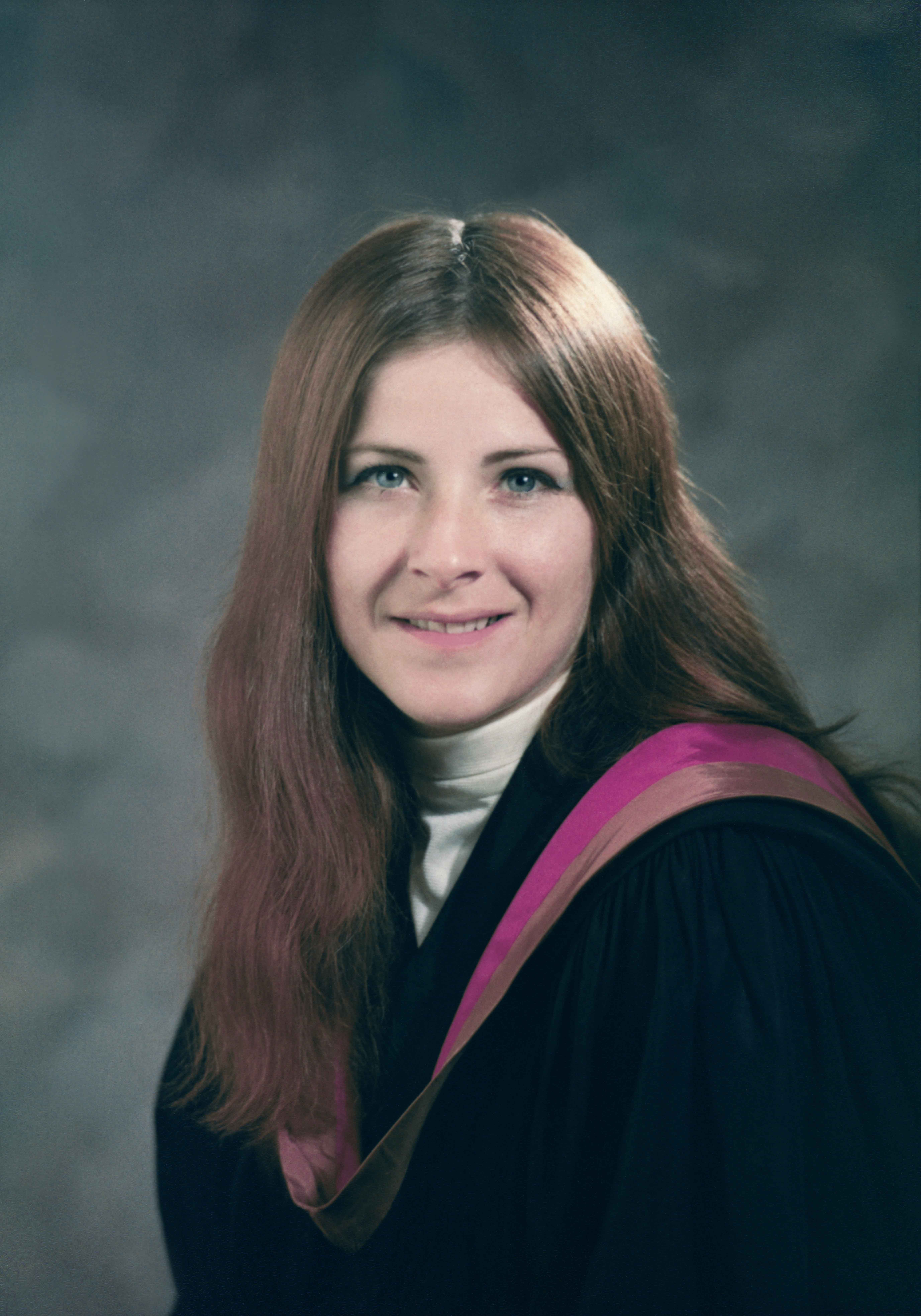
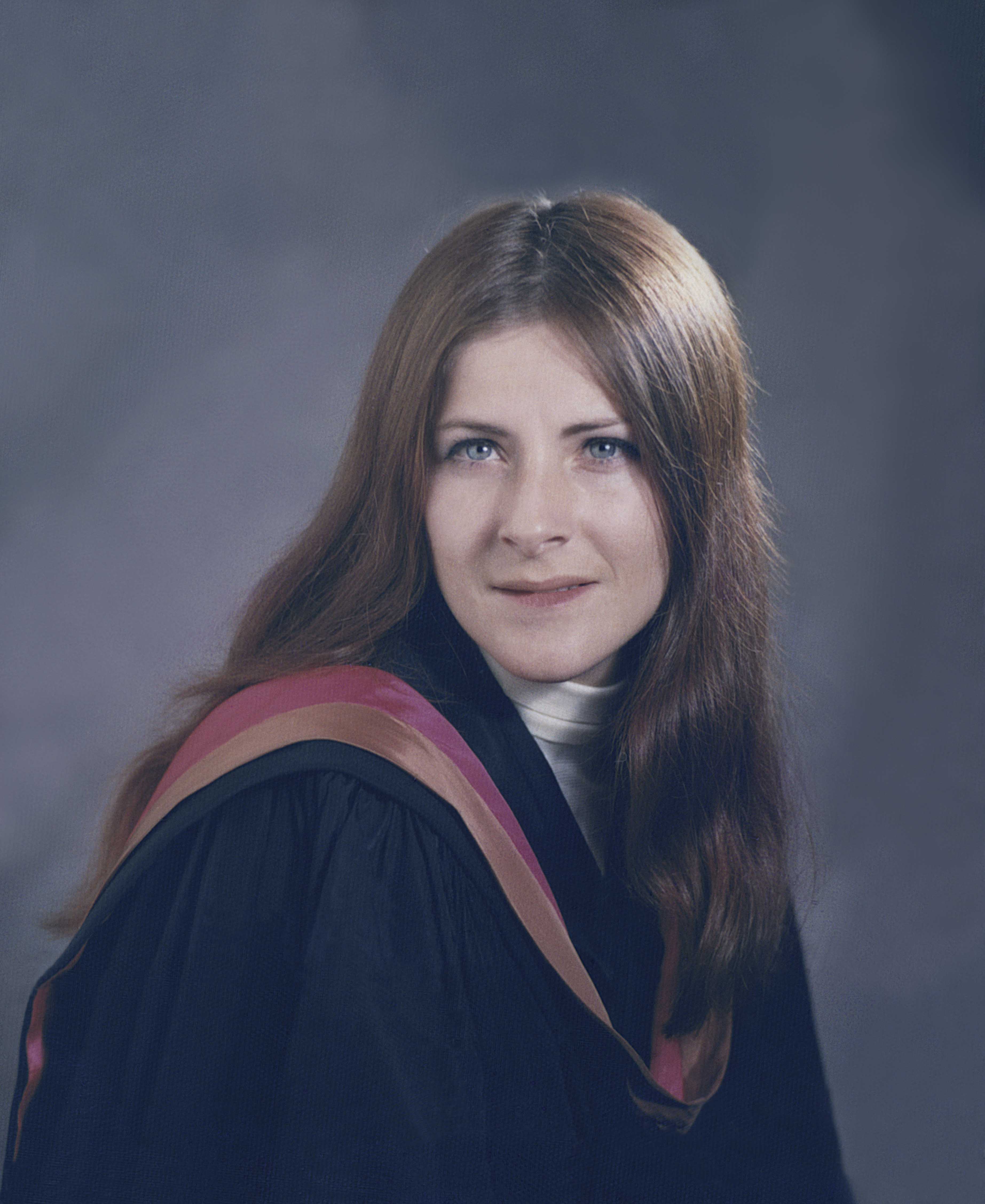
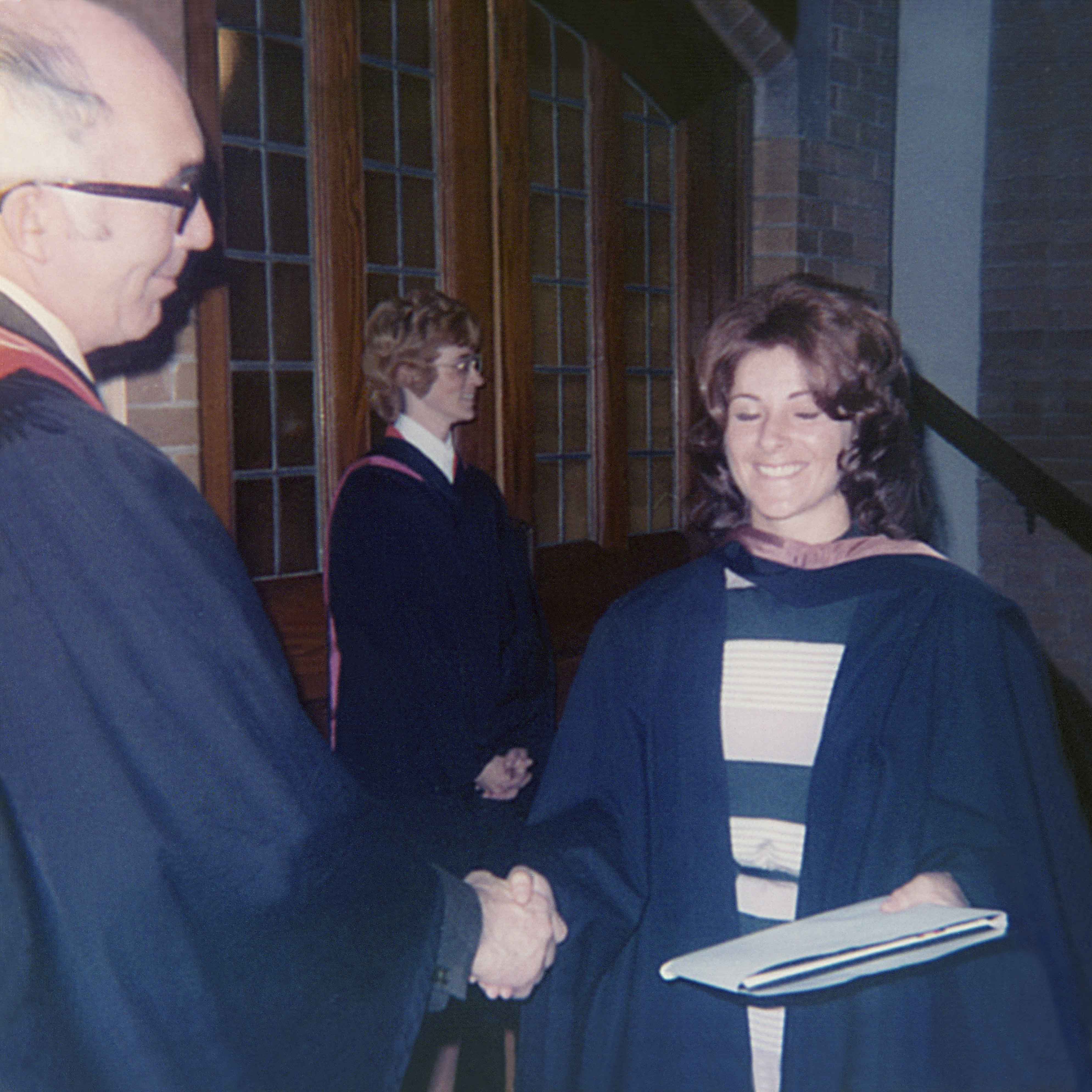
• Growing up, my parents were very strict. My mom kept an eye on me and punished me if I didn’t do well in school. She consulted with the teachers when I misbehaved, and that kept me in line. I was repeatedly told that I would do better if I applied myself. Throughout high school I was an average student. I really came to my senses once I decided to attend university, and study veterinary medicine. Finally I was studying what I enjoyed. In my first year I met Vašek Dusil, who was in his fifth year of veterinary studies at the time. When we started dating he insisted that I regularly go to lectures, even though they weren’t compulsory. Out of 120 students in the class, less than 10% attended lectures. I came to realize it was good to be seen by the professors who later tested us, since all the exams were verbal. I was among the first in my class to complete and pass my exams. I finished four years of university in Košice before we emigrated to Canada. Once there I completed my veterinary studies at the Ontario Veterinary College at the University of Guelph.
• Dusil
If you missed the previous Dusil posts, then click on these links:
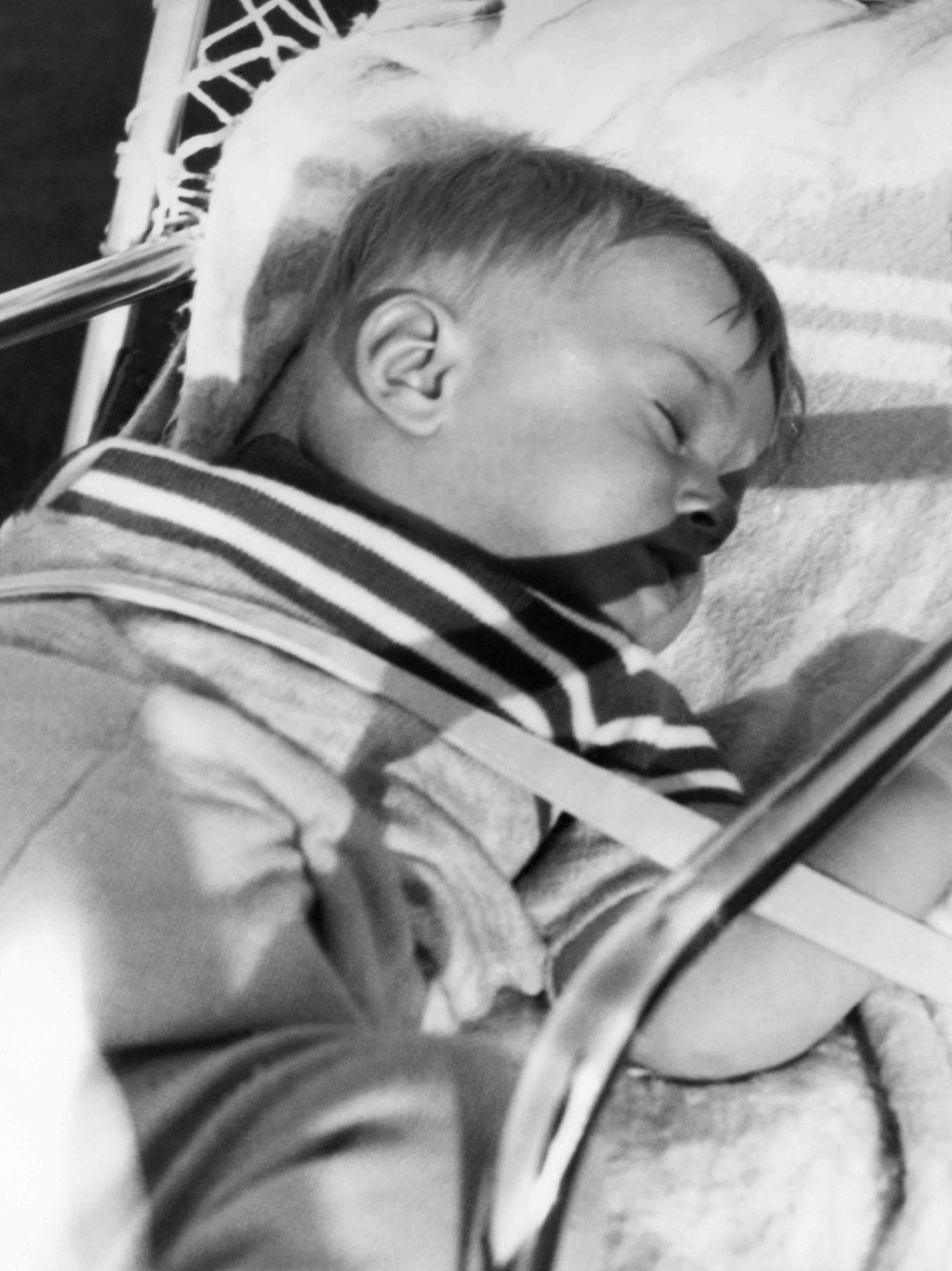
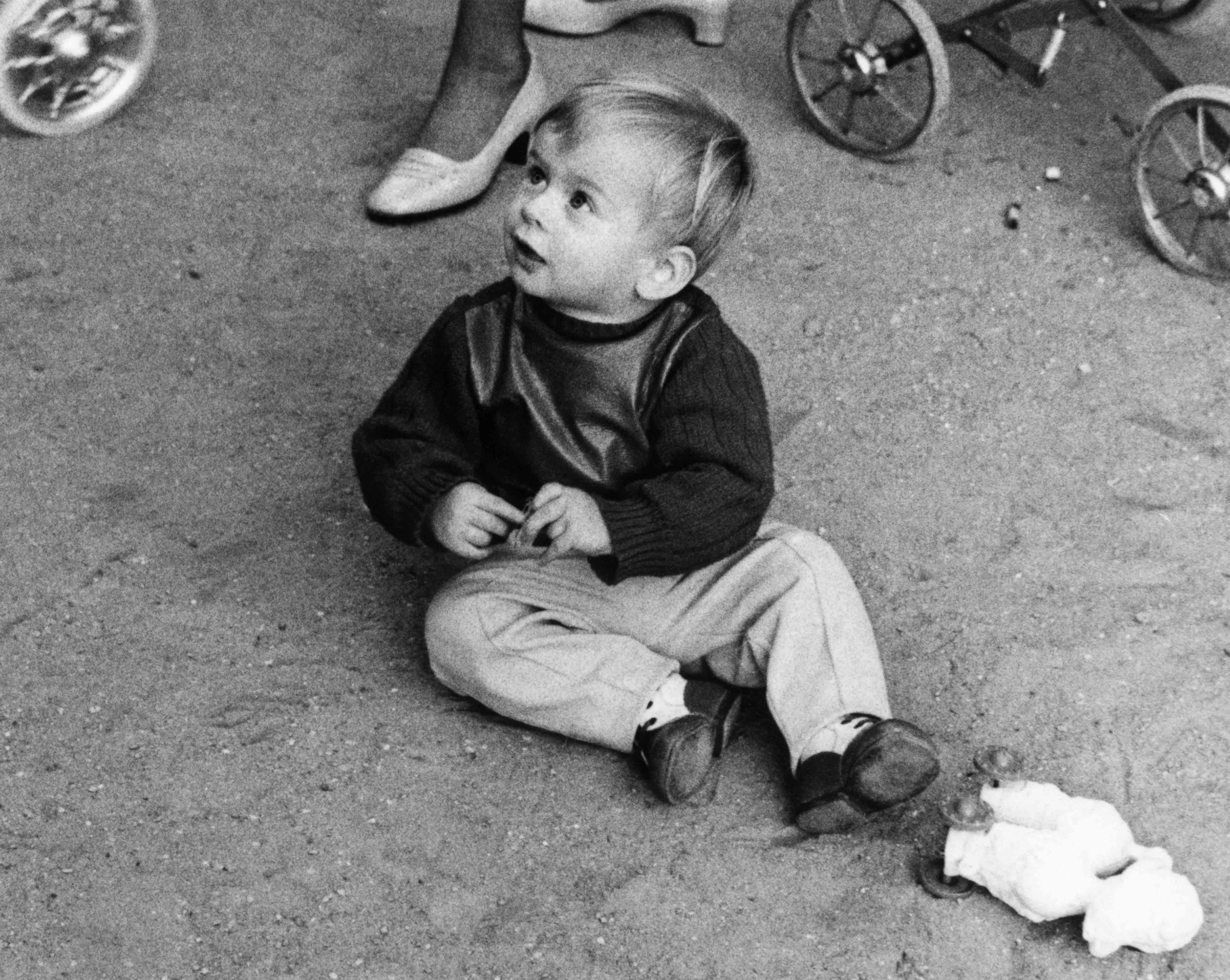
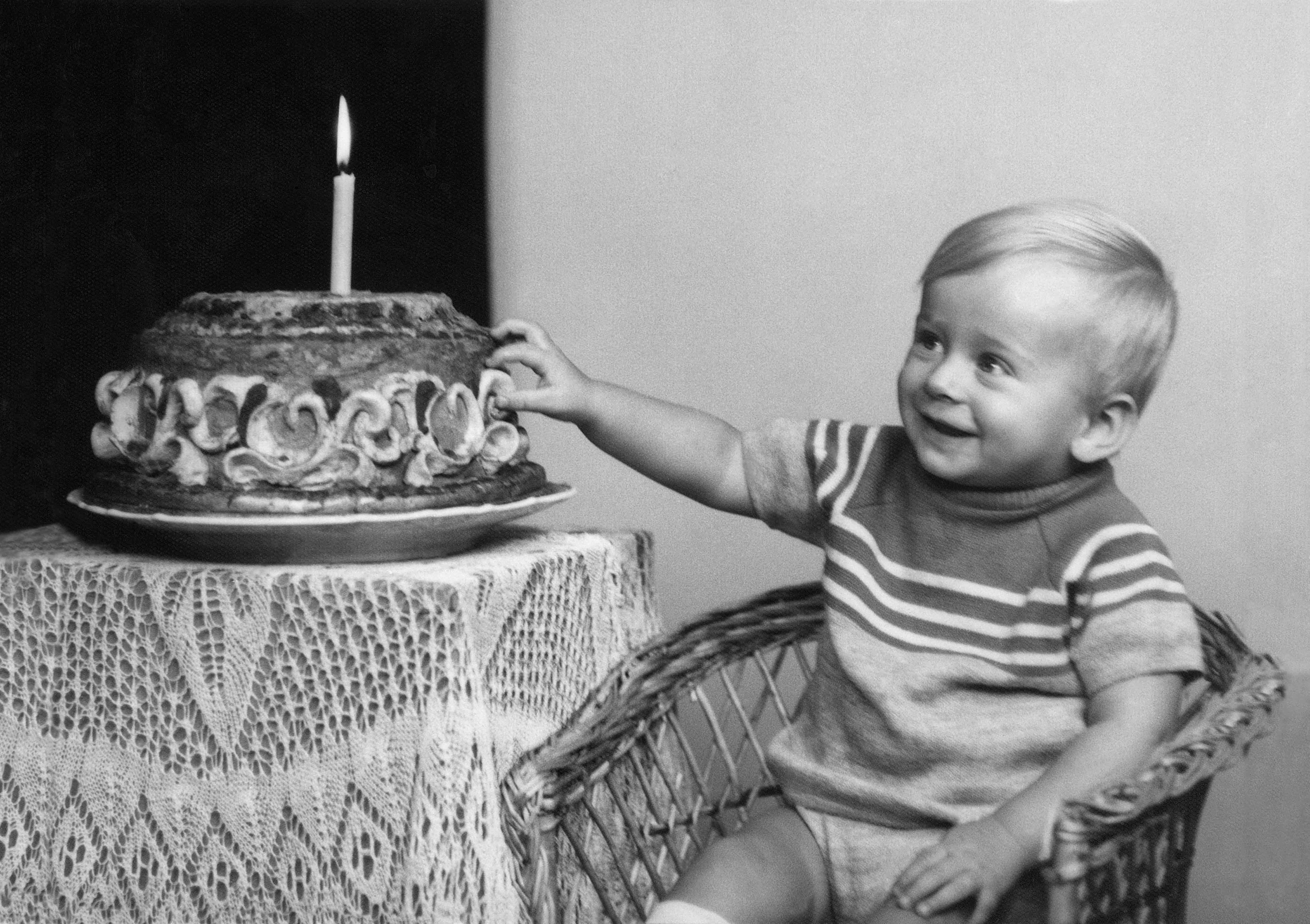
69.Apr – Košice · Gabriel Dusil (sleeping)69.Oct – Paris · Gabriel Dusil (on the ground)69.Oct – Paris · Gabriel Dusil (park bench & toy)69.Sep – Košice · Gabriel Dusil (my 1st birthday cake)69.Sep – Košice · Gabriel Dusil (touching 1st birthday cake)70 – Toronto · Gabriel Dusil (Leslie St., bowling)70.Sep.18 – Toronto · Gabriel Dusil (birthday cake)70.Sep.18 – Toronto · Gabriel Dusil (glass grapes)71 – Brampton · Gabriel Dusil (Jack & Jill Nursery)71 – Montreal · Gabriel Dusil (Slavo’s flat, statue)
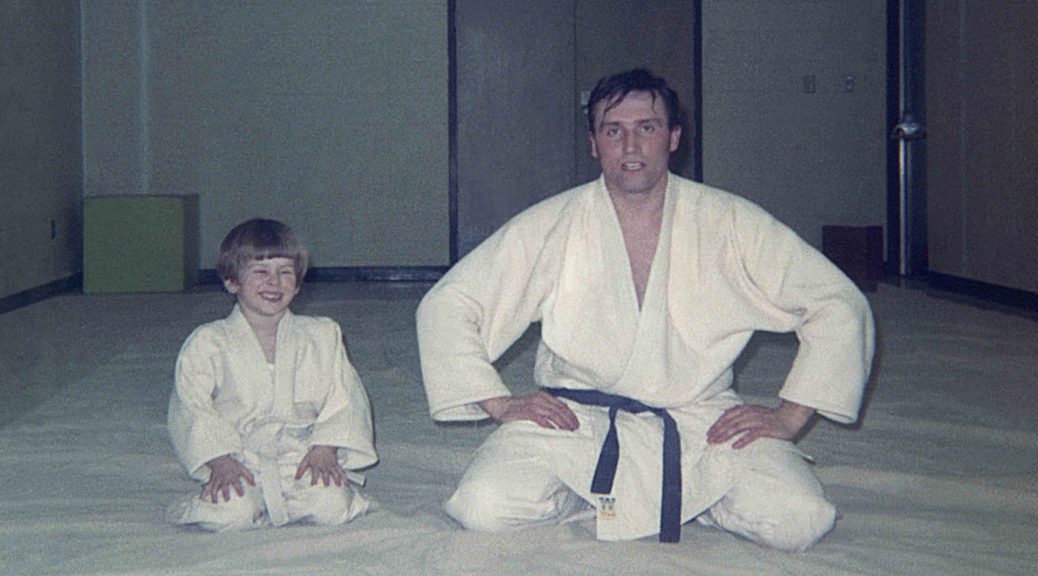
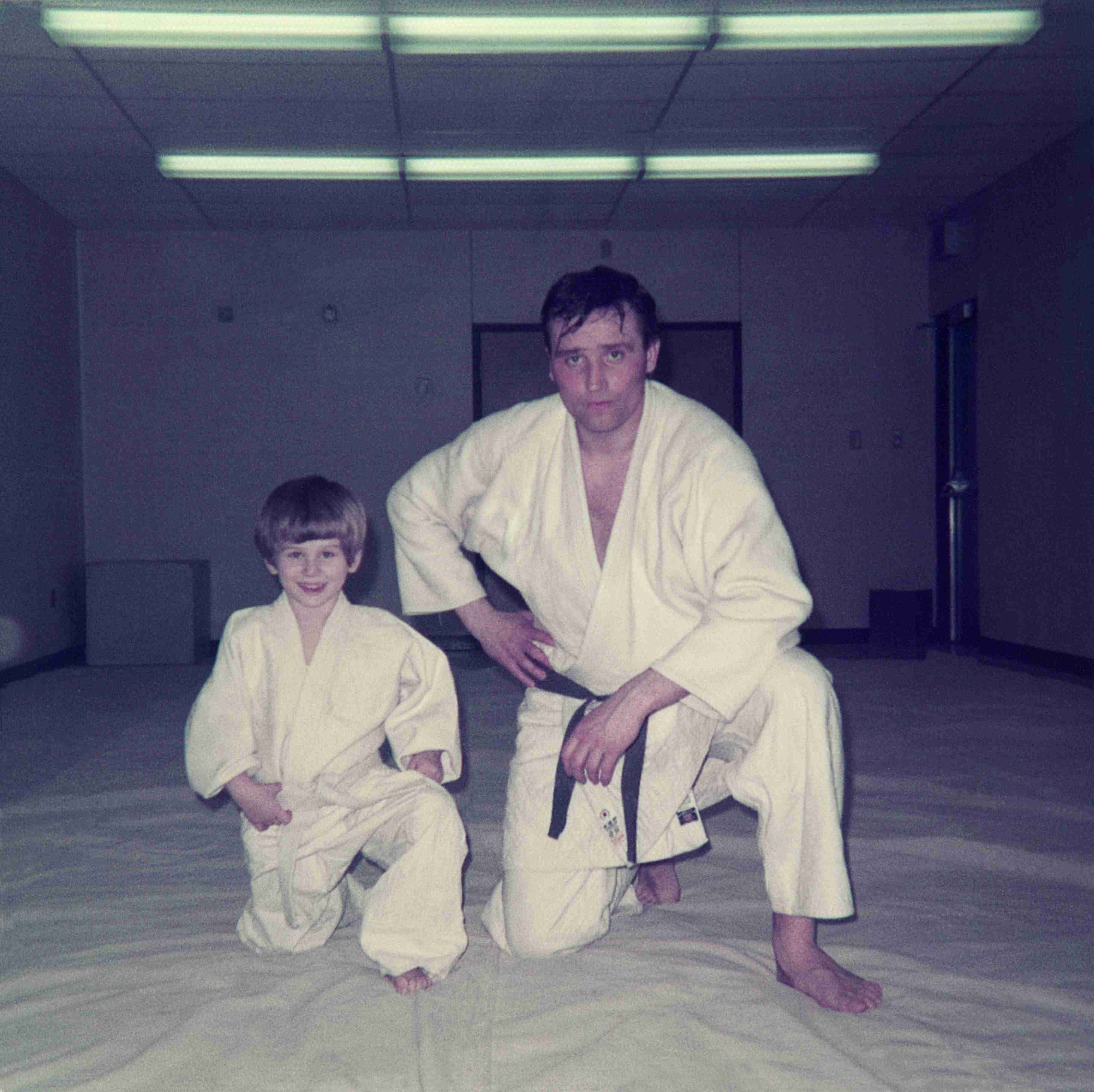
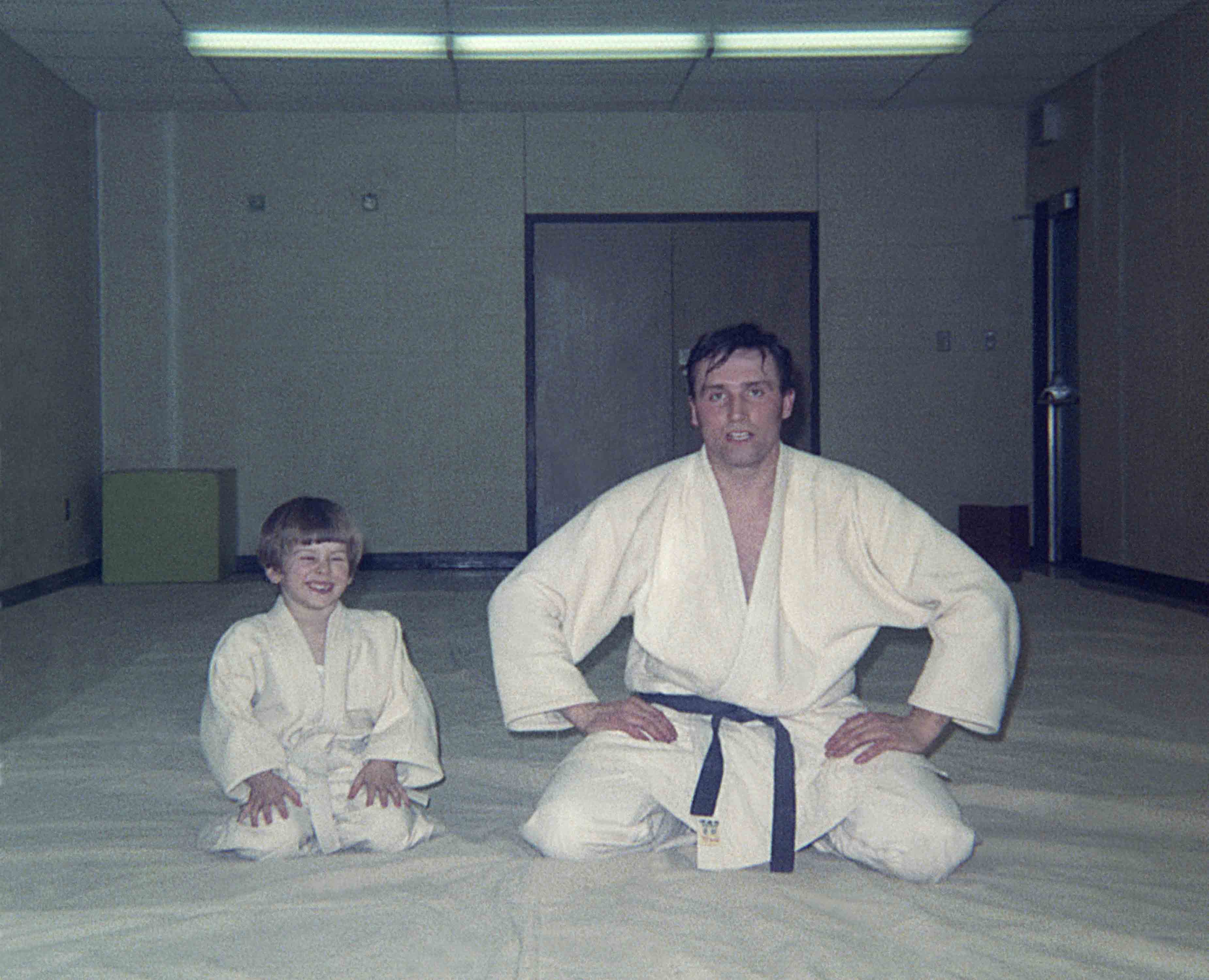
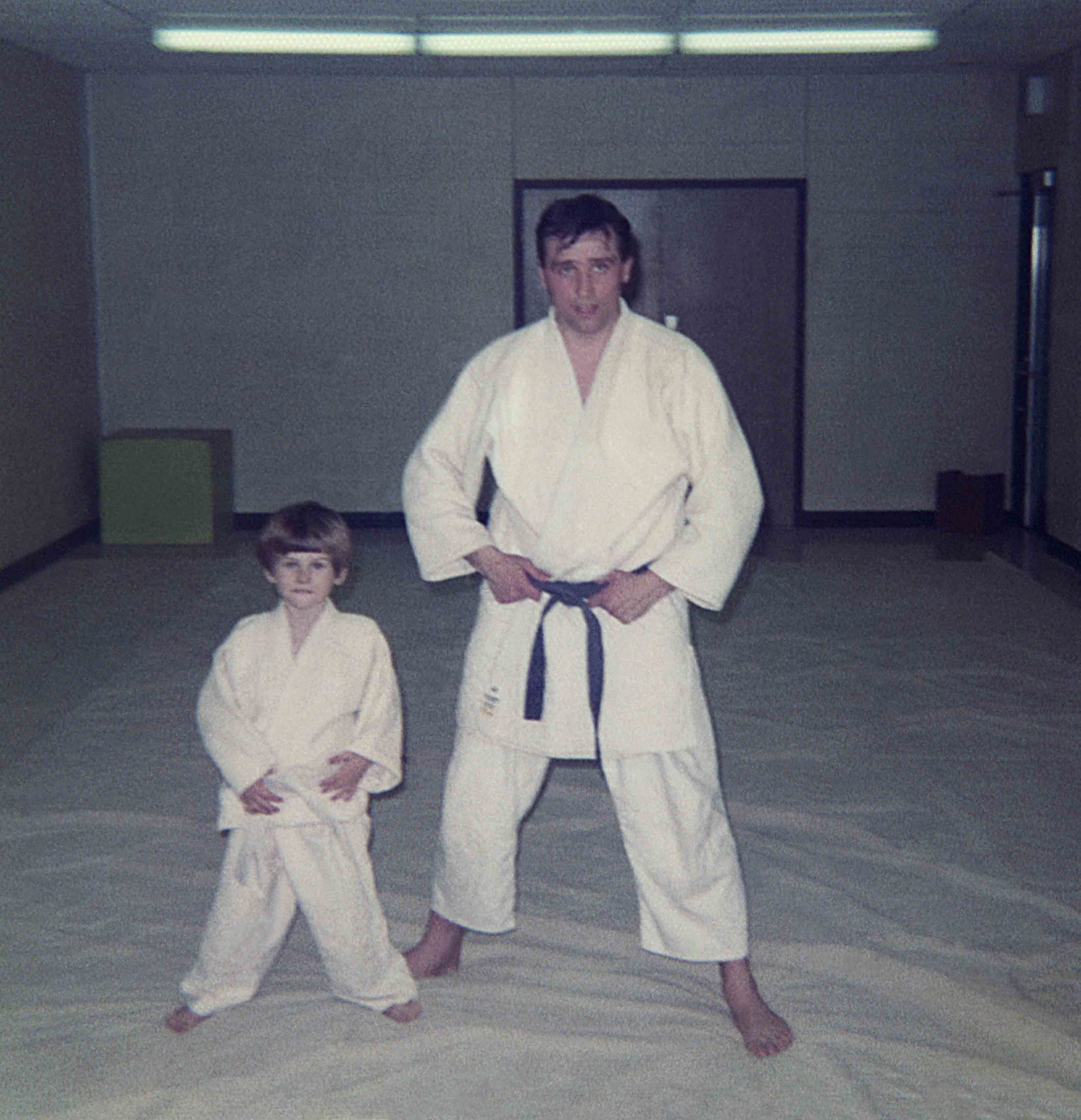
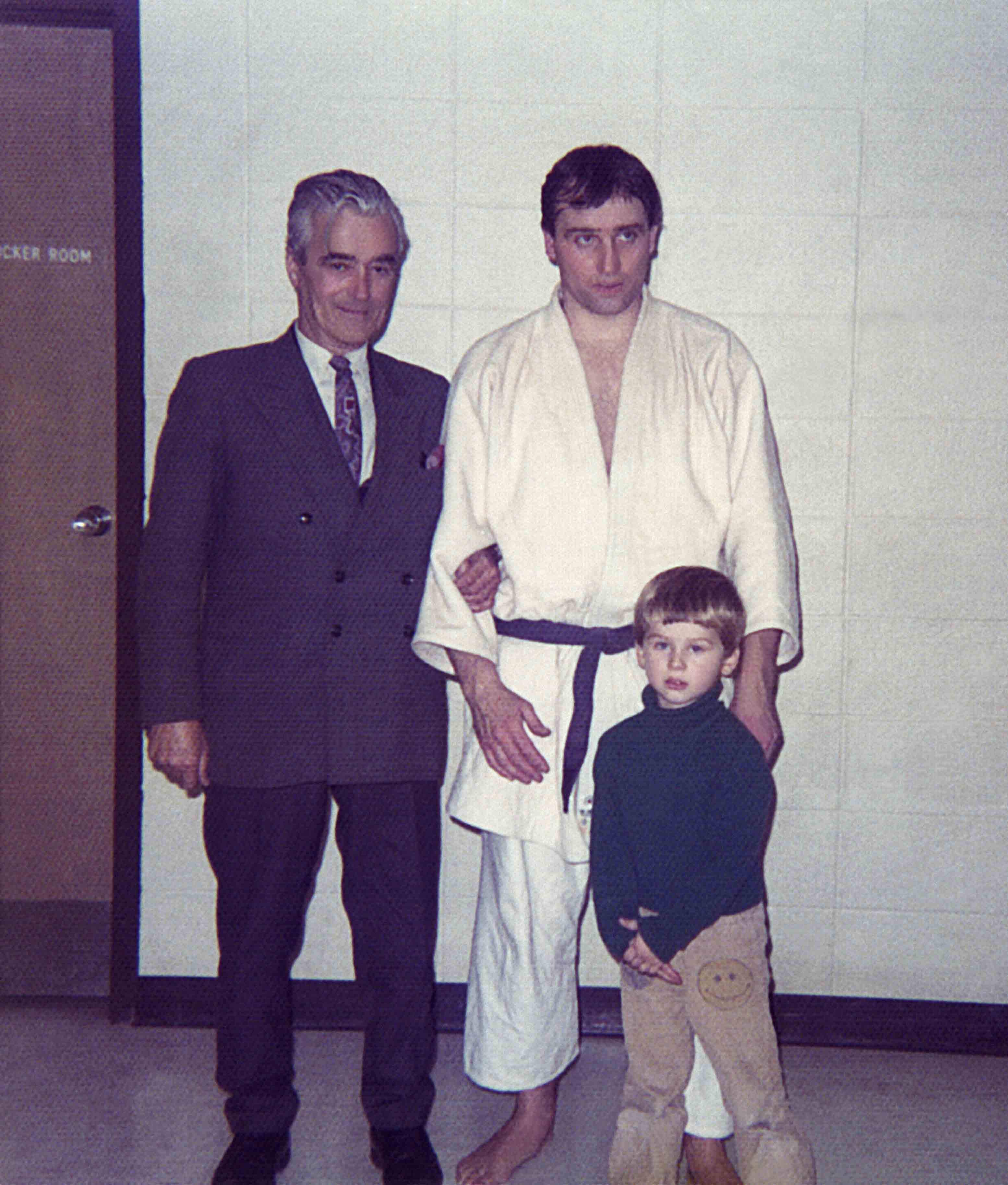
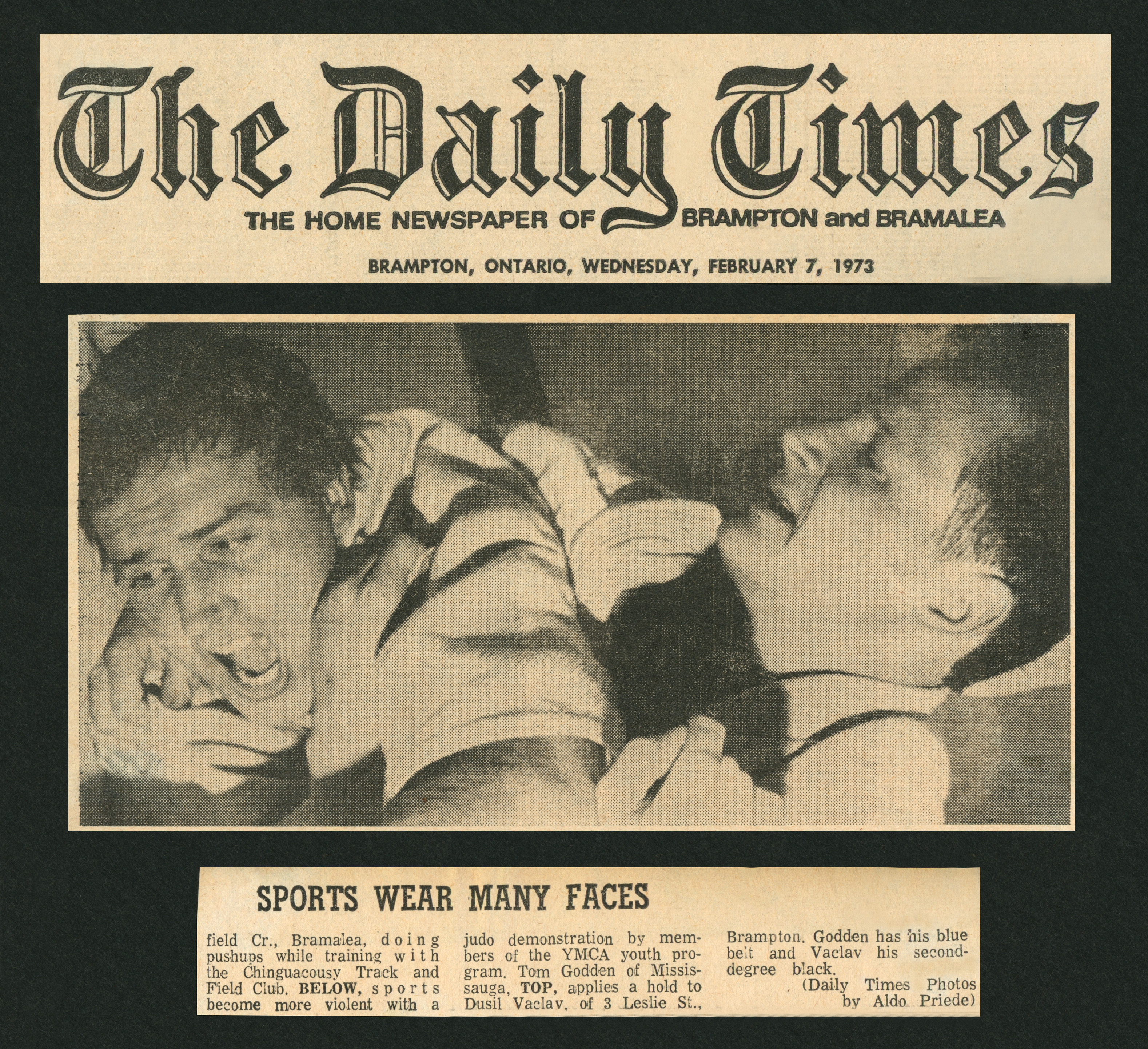
• All three Dusil brothers were active in Košice judo until they emigrated in 1968 and 1969. Two years after our arrival my uncle and his family moved to Hamilton, Ontario, Canada and began training at the Kawasaki’s Rendokan Judo Academy. We moved to Burlington in 1973 and my father joined him, to train under Sensei Kawasaki. Mitchell Kawasaki was a elite athlete, representing Canada in the 1976 Summer Olympics in Montreal, Quebec, Canada in Greco-Roman wrestling. I also trained at the Rendokan Academy with my cousin Roman, but we mainly fooled around at the back of the dojo for most of the session.
• When I turned fifteen I decided to take up martial arts again. My attraction was to the striking disciplines rather than grappling, so I decided to try Karate. It just so happened that my mother’s painting instructor’s husband, Ray Davis, was a Shotokan Karate (松濤館) Sensei. He held a fifth dan black belt at the time. On my first day Sensei Davis gave me a personal lesson. That was uncommon, since normally a blue or brown belt would teach a beginner on their first day. I was hooked from the start. After four years I graded for my black belt in my final year of high school. My training continued throughout university.
• In my final year of university studies I met Jim Flood, a world champion martial artist, also with a background in Karate. He had recently opened his own club. For the next two years I trained at Floods Positive Impact Martial Arts in Hamilton. I taught children and adult classes as well. It was the best training facility in the region. Tuesday were memorable because Jim would invite black belts from any school, to come and spar for free. In the early 90’s before Mixed Martial Arts (MMA) began, it was a unique chance for us to learn from different styles. It was a positive and motivational atmosphere. Jim had us check our egos at the door.
• Judo
If you missed my previous posts on Judo, you can find them here:
• Introduction by Eva Dusil • Editing by Gabriel Dusil • 2014 November
• I began my university studies in Košice, Slovakia in September of 1965. There were three other girls in the program. None of them finished. In fact of the 120 students that started only 40 became veterinarians. Those that dropped out either couldn’t handle the curriculum or realized they enrolled in the wrong profession. From 8:00 in the morning until 17:00 I was busy attending lectures and labs.
• When I continued my studies in Canada, I realized the contrast in the educational practices between the East and West. I came from a teaching system of intimidation. I initially believed that I was accepted into the Canadian education system so they could show how little an “Easterner” knew – after being humiliated they would kick me out of the program. In time I realized that wasn’t the case. The objective in Guelph was to teach the students – surprise surprise – and help them become great veterinarians. I soon became a proud student and felt that I was a member of an important establishment. The teaching staff were colleagues as well as friends. They didn’t posture as senior educators, acting pompous or patronizing to the students. That regime was now behind me. In Guelph the lectures were comprehensive and geared toward teaching techniques that were relevant in real practice. I realized that as a student of higher education I could be a progressive force in society, and a positive instigator of change. I graduated two years later. During my time at Guelph I made many friends with the students and teaching staff. I found them to be decent, hardworking, and ambitious. I learned what it meant to be Canadian.
• I lived in residence during the week and came home most weekends. Trips to Brampton on Friday afternoons were filled with anticipation, to see my son, Gabriel. He attended Jack and Jill nursery school until 17:00. Then he had a babysitter until 20:00 when Vašek came home from work. These were difficult times for all of us.
• Mamička
If you missed other Mamička posts, you can link to them here:
73.Jun – Guelph · Eva Dusil (University of Guelph, graduation photo)
73.Jun – Guelph · Eva Dusil (University of Guelph, graduation alternate photo)
73.Jun – Guelph · Eva Dusil (University of Guelph, graduation, class photo)73.Jan – Guelph · Eva Dusil (College of Veterinary Medicine, graduation class)73.Jun – Guelph · Eva Dusil (College of Veterinary Medicine, graduation, convocation program)
73.Jun – Guelph · Eva Dusil (College of Veterinary Medicine, graduation, lawn)73.Jun – Guelph · Eva Dusil (College of Veterinary Medicine, graduation, waiting)73.Jun – Guelph · Eva Dusil (College of Veterinary Medicine, graduation, certificate)73.Jun – Guelph · Eva Dusil (College of Veterinary Medicine, graduation, Dr. Hans Selye)73.Jun – Guelph · Eva Dusil (College of Veterinary Medicine, graduation, Dr. Hans Selye w. Vaclav & Gabriel)
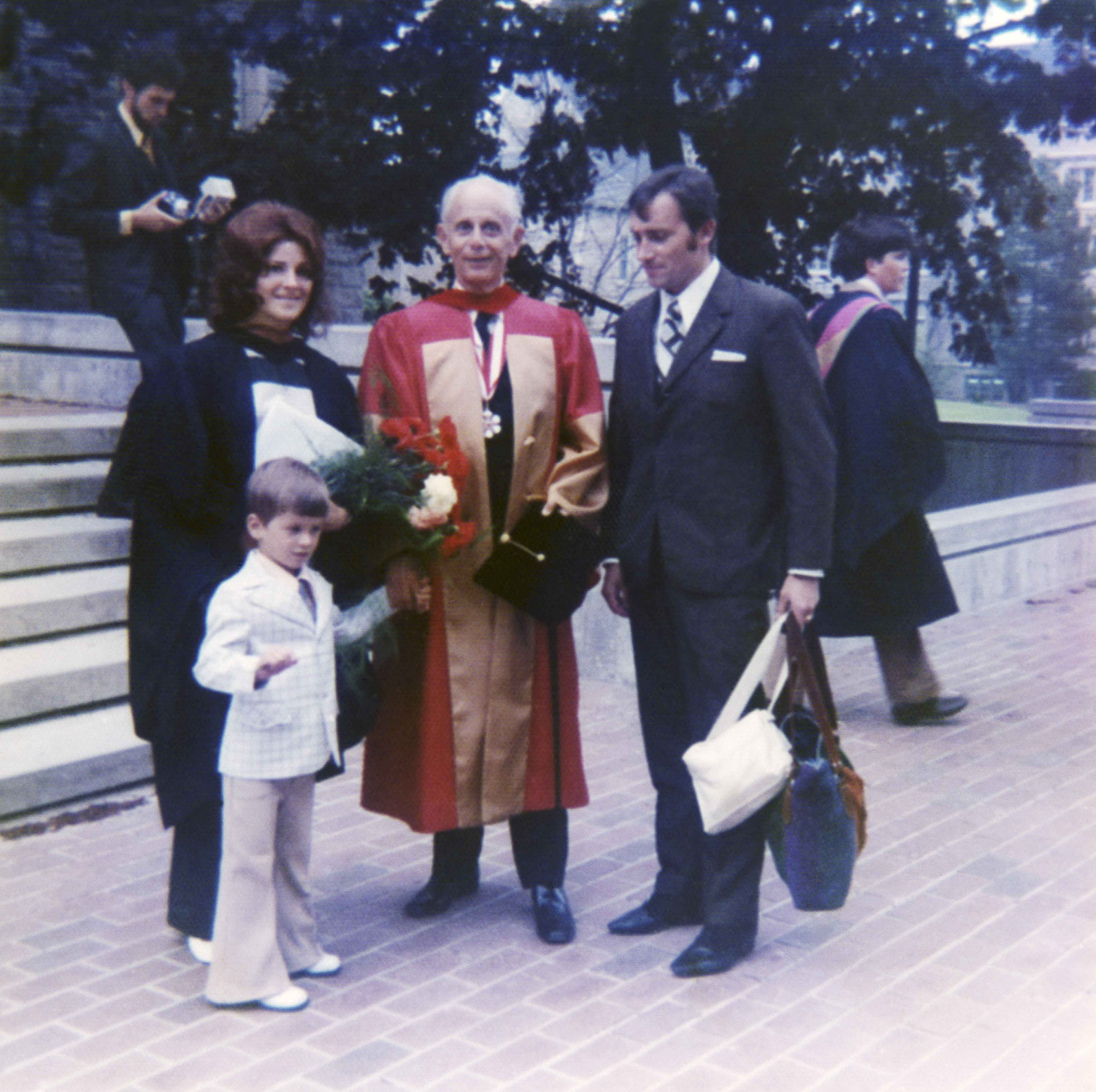
• Postscript by Eva Dusil • 2014 November • This is an important photo with Dr. Hans Selye, the author of Stress without Distress. I heard of him when I was a young girl from my father. He is a graduate of Charles University in Prague. Dr. Selye spoke several languages including Hungarian. In 1968 he was honored with the Companion of the Order of Canada – the highest decoration award, in Canada. I am very proud of this photo with him.
• I had a strong mother to carry me into teenage-hood. I found my strength in her, even if I didn’t realize it at the time. Losing my father at 12 meant missing out on the opportunity to absorbing many of his traits. As I entered puberty I completely ignored the testosterone infused raw-raw spirit of team sports, for instance. I had no interest in football, soccer, or baseball. To me it was just herd behavior, and that reminded me of being bullied in elementary school. I watched as passive by-standards got caught up in the frenzy of the crowd, suddenly finding themselves participating with the bullies. I still had a competitive spirit and found my strength in individual sports like swimming and martial arts. I often felt that the war zone I experienced in elementary school made me stronger, preparing me for various battles I faced in the corporate world.
• Throughout my teens I acquired my emotional intelligence from my mother. She was the disciplinarian, but underneath her tough exterior was a loving heart. I saw that more as I grew up. I realize in hindsight she had a profound effect my emotional sensitivity, and how I expressed it. I was emotionally complicated, and it effected my social interactions in positive and negative ways. Mainly my girlfriends noticed it, as they were much closer to my emotions than others. I looked into someone’s eyes and see their soul. It was my way of understanding what made then tick. I sometimes needed to avoid eye contact to not see that part of them. Other times I found it unnerving when I couldn’t immediately see who they really were. As if they were hiding something. In business I would walk into a room and feel the layer of emotion that dictated the meeting. Then I would deliberately change it to suit my agenda. Controlling the room’s emotion allowed me to control the meeting.
Chapters
If you missed the other chapters, you can find them here:
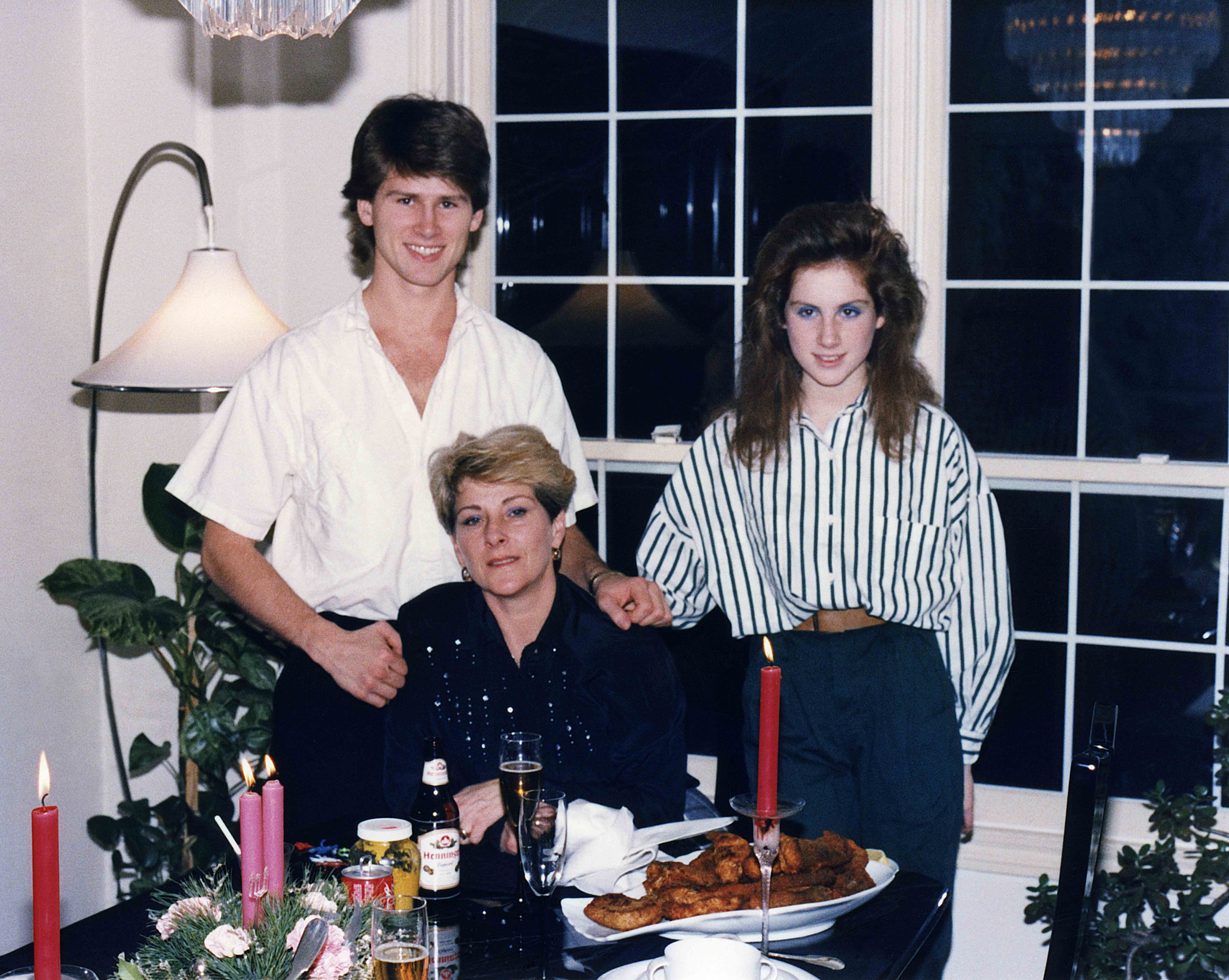
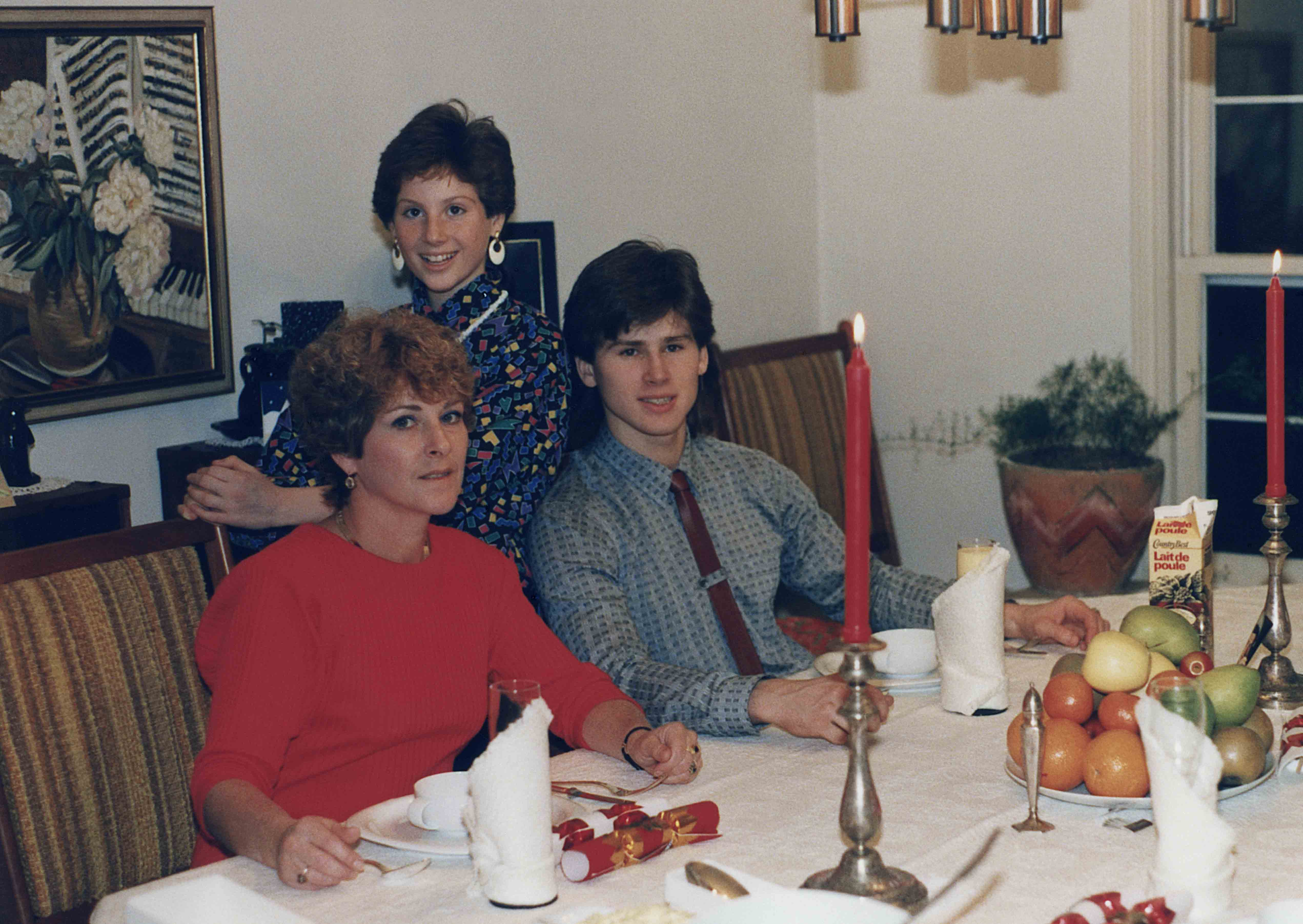
87.Jun – Burlington · Eva & Gabriel Dusil (Aldershot High School, graduation)87.Jun – Burlington · Gabriel & Eva Dusil (high school graduation)87.Sep.6 – Kingston · Eva & Gabriel Dusil (Queens University)88.Jun.28 – Burlington · Alica & Eva Dusil (Holy Rosary, graduation)90.Dec.24 – Burlington · Gabriel, Eva & Alica Dusil (Christmas)86.Sep.18 – Burlington · Eva & Gabriel Dusil91.Dec.24 – Burlington · Eva, Alica & Gabriel Dusil (christmas)92.Dec.24 – Burlington · Eva & Gabriel Dusil (family room)96.Apr.14 – Burlington · Eva & Gabriel (driveway)96.Dec – Burlington · Eva Dusil (Christmas)
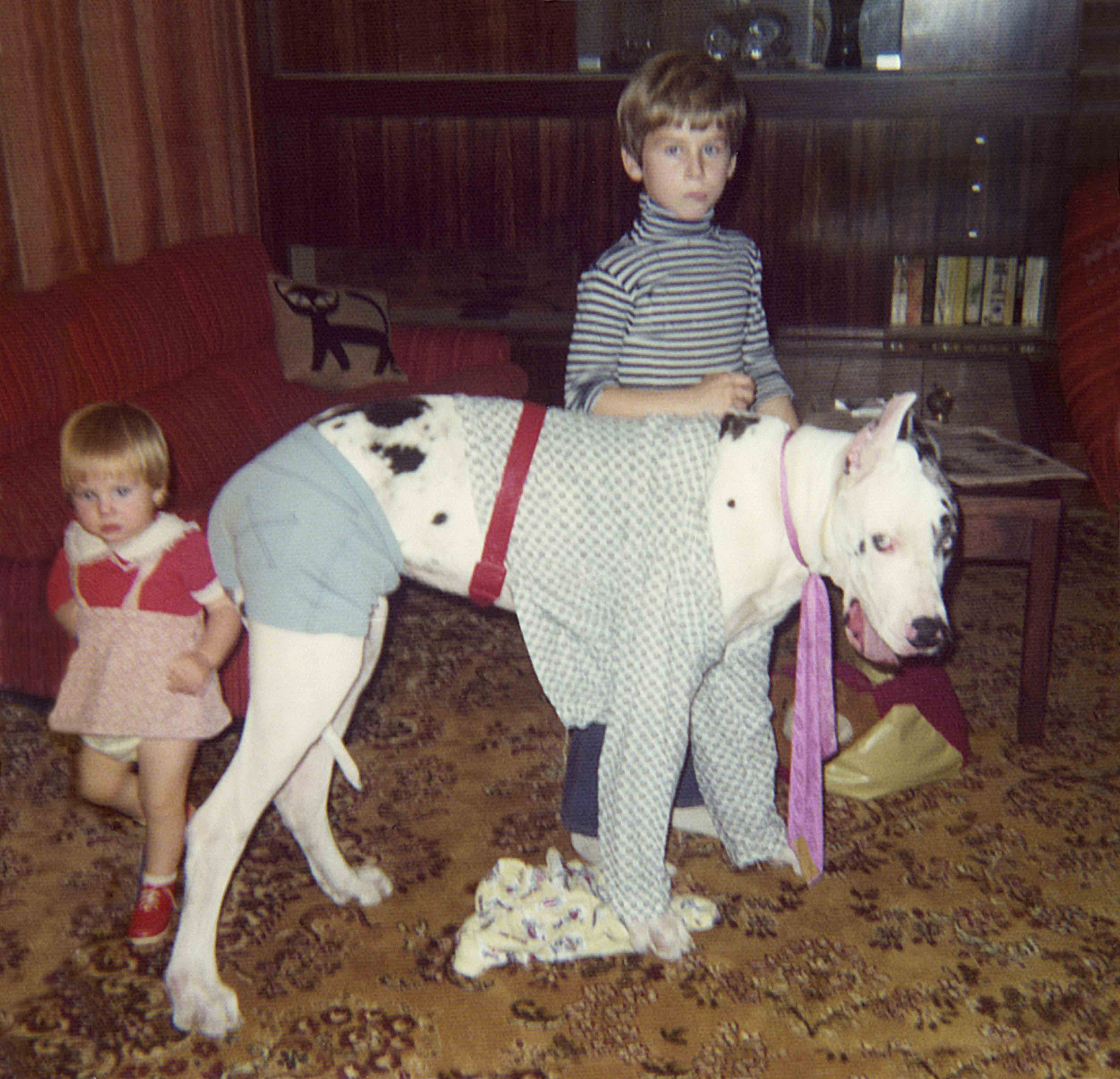
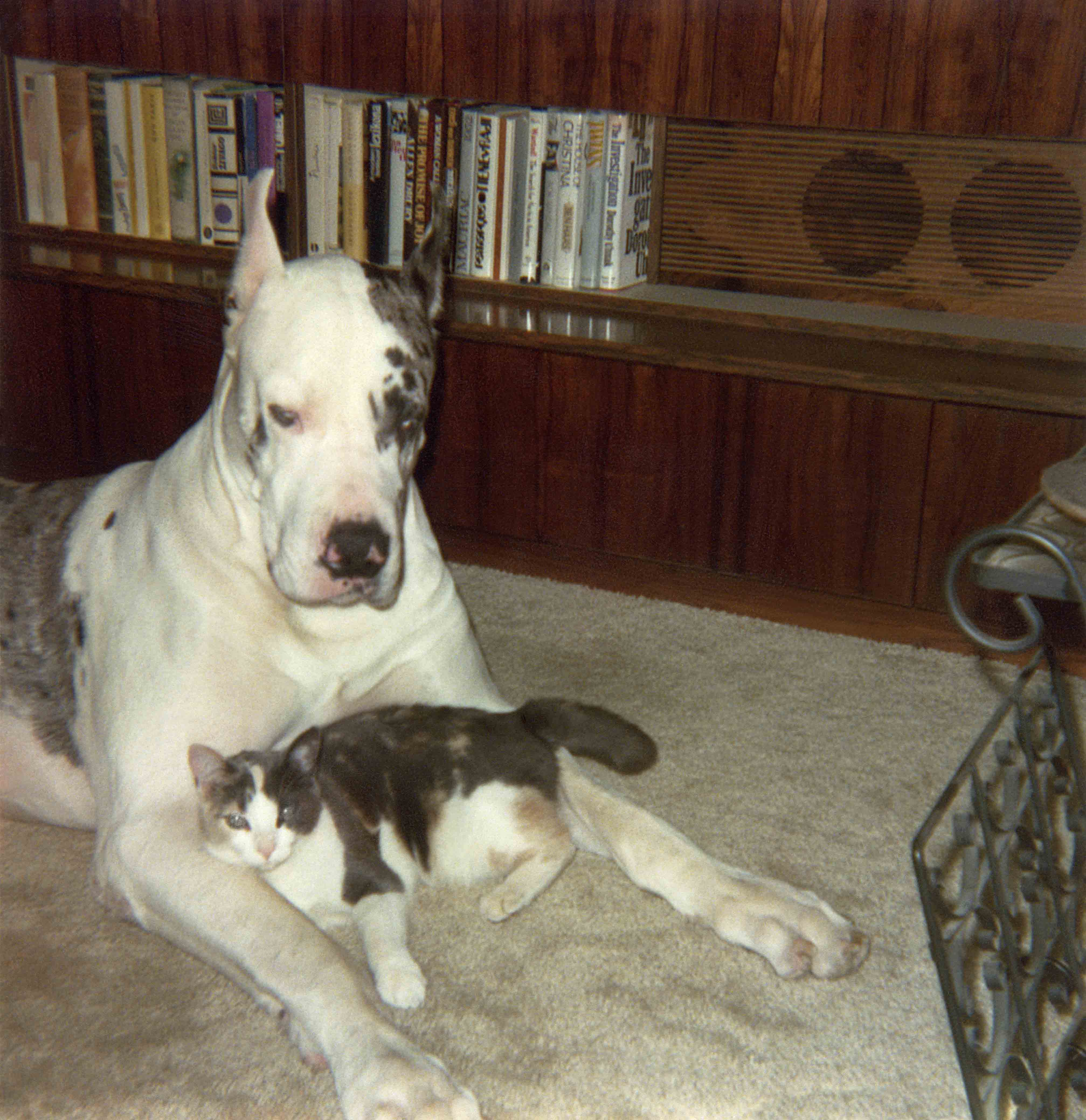
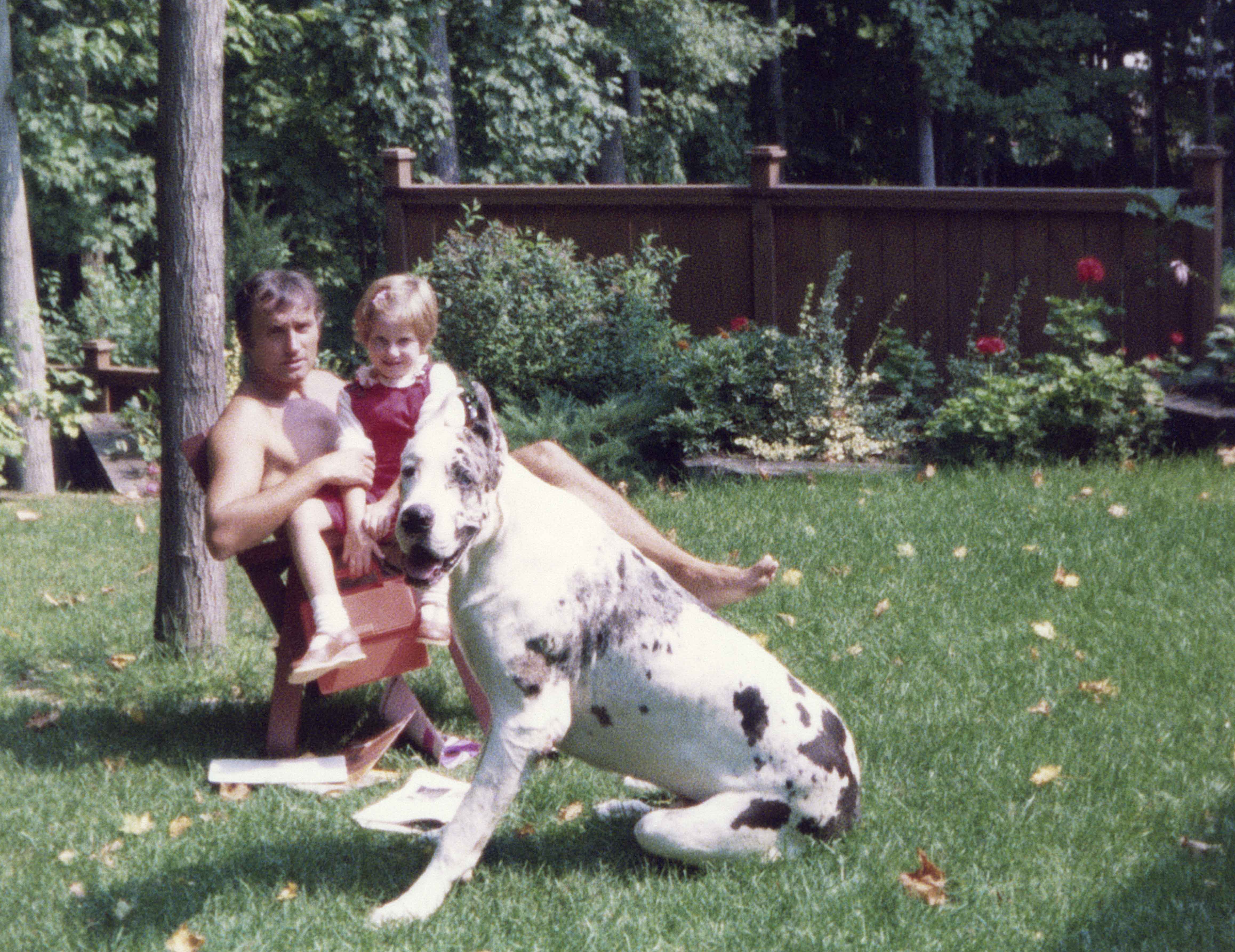
• As huge as he was, Cezar was a gentle giant. He never bit any of us. Cezar even made futile attempts to play with our cats but was abundantly clear that – when push came to shove – he was terrified of claws. I loved our first cat Puci, but I was a bad guardian. As a toddler I wasn’t versed in the etiquette of looking after animals. To keep my toddler brain amused I tortured him endlessly. In one horrifying incident, I piled every single pillow I could find in the house, on top of him. When I eventually removed them one by one and couldn’t find him. Suddenly my mischief changed to terror, regretting that something had happened to my cat. It was one of those moments when the consequences of my actions slapped me in the face. As I scrambled to find Puci I saw him licking his wounds in the hallway. To my relief somehow he slipped out without me noticing.
• My most regretful moment was when a friend came to visit and I had this brilliant idea to impress him by dropping Puci off our first floor landing to the ground floor! “Cat’s can survive when they fall from a high distance” I said with conviction. Certainly not a proud moment. Thankfully he survived and wasn’t seriously injured. When Puci didn’t come home one day, I blamed myself. I felt that he no longer wanted to endure any more of my abuse. That realization had a lasting effect on my behavior towards our future pets.
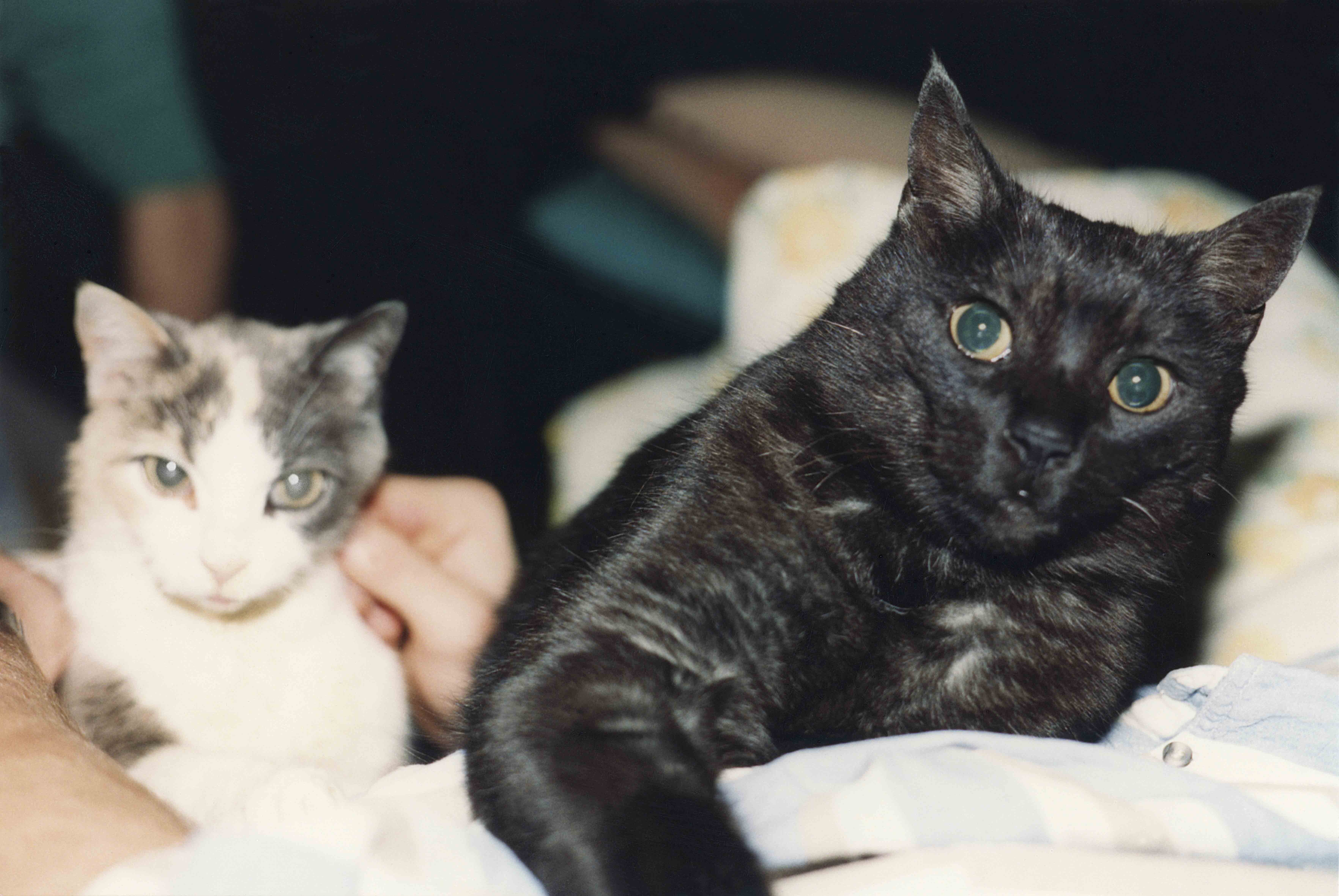
• I cleaned up my act when we got Nuri, our second cat. He was named after the Soviet-born ballet dancer, Rudolf Nureyev. I vowed to be good to Nuri and never hurt him. He was a strong cat. Definitely an alpha male, and Cezar didn’t mess with him. In fact Cezar didn’t mess with any creature as small as a tenth his stature.
• Dusil
If you missed the previous posts on Dusil, then click on these links:
• Introduction by Alica Dusil • Editing by Gabriel Dusil • 2015 April
• I am proud of what Taci accomplished. But I don’t have memories of Taci and don’t feel thankful for what he has done for me, other than give me life. To be clear – I’m not angry. I just believe that in the thirty three years I spent building my life, shaping my personality has nothing to do with him. Maybe it’s a clique that a daughter who has lost her father figure at such a young age doesn’t grow up with a great outcome. But I’ve worked hard to break that stereotype, and it hasn’t been easy. Although I still hold a grudge, I think that much of whom I have become is based on what happened to us. My true hero is Mamička.
• Taci
If you missed the other Taci posts, you can link to them here:
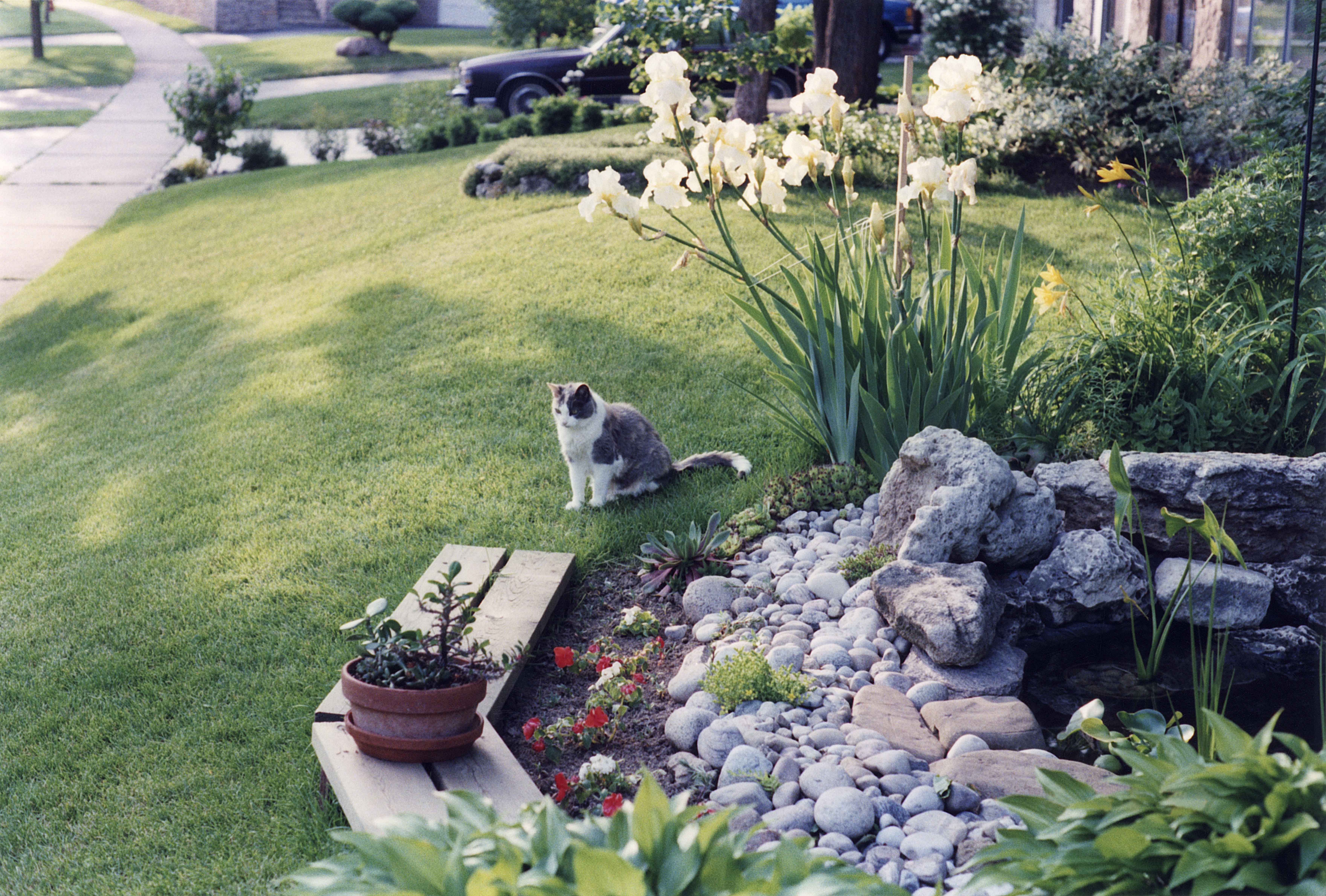
• I walked to the Aldershot Animal Hospital every day after school. But one day was special. It was a fresh school year, and I had just turned eight. Michele Cieslik was working that day, and she told me that a litter of cats arrived. She asked if I wanted to play with them. Michele brought out a cage with four kittens. There were three orange and white males and one female. The kittens crawled all over each other, crying with a high pitched meow. I took one out. Then another. Then another. I didn’t want to take them out at once for fear of mayhem. Then I noticed that the female was smaller than the rest. She was tricolored – white, orange and black. Her coat was more oily that her brothers. She also seemed weaker as they trampled all over her. I took her out. She clung to me with dear life, and started to crawl up my arm, then across my shoulder. Maybe it was because I was bullied at school, and needing to protect the weakest one. But I felt an immediately connection. The funny thing is that I realized she wasn’t weak at all. She was feisty to where I felt she was compelling me to take her away from these bullies. She had a will to survive. After about a half an hour I put the kittens back in their cage, and brought them all inside. I showed Michele the tiny female kitten I fell in love with. She said I could have her if I wanted, and her name was “Inchy” – appropriate because of how tiny she was. When I got home my mom told me that someone left those kittens at the front door of the animal hospital that morning in a cardboard box.
• It was clear from the onset that our much larger alpha-male cat Puci, was the leader – rarely did Inchy challenge that. For years I had to feed her in the closet of my bedroom. Puci was so dominant he would often eat all his food and hers as well. Many times I had to scare Puci away so he wouldn’t steal Inchy’s food. Even still she remained very thin throughout her life. As small as she was, she wasn’t sick once, in her whole life.
• There were many evenings when I realized that Inchy wasn’t inside the house. So I would opened the kitchen door and call out to her. Usually within a few minutes she would come running into the house. In the winter I was most concerned. I never wanted her to sleep outside in the cold. Usually she came home, but there were a few nights that I would call her for what seemed like countless minutes. But she wouldn’t come home. Those nights my compassion overshadowed my realization that she was versed at taking care of herself. I tried to comfort myself hoping she had a warm and safe place to sleep.
• Dusil
If you missed the previous posts on Dusil, then click on these links:
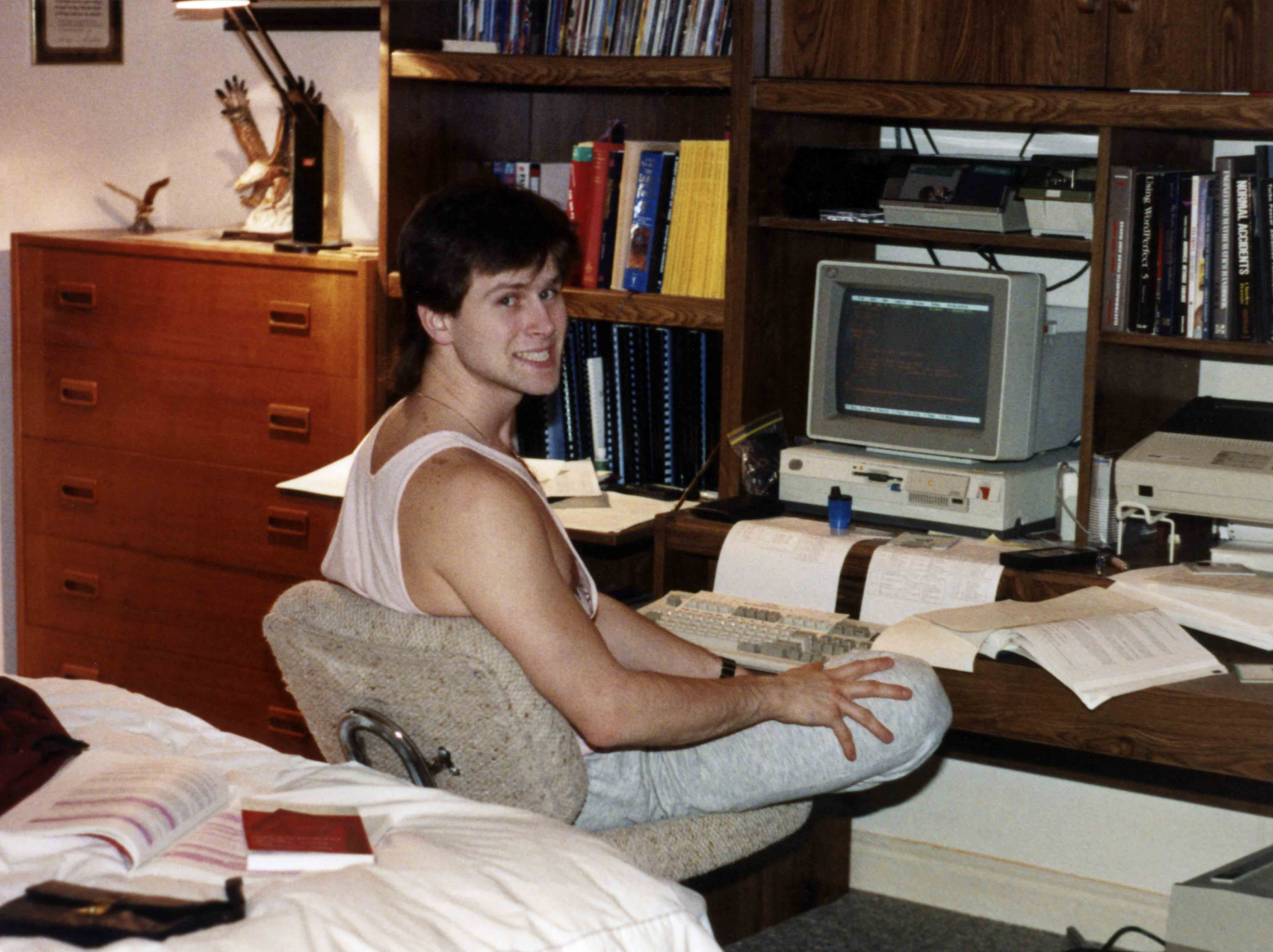
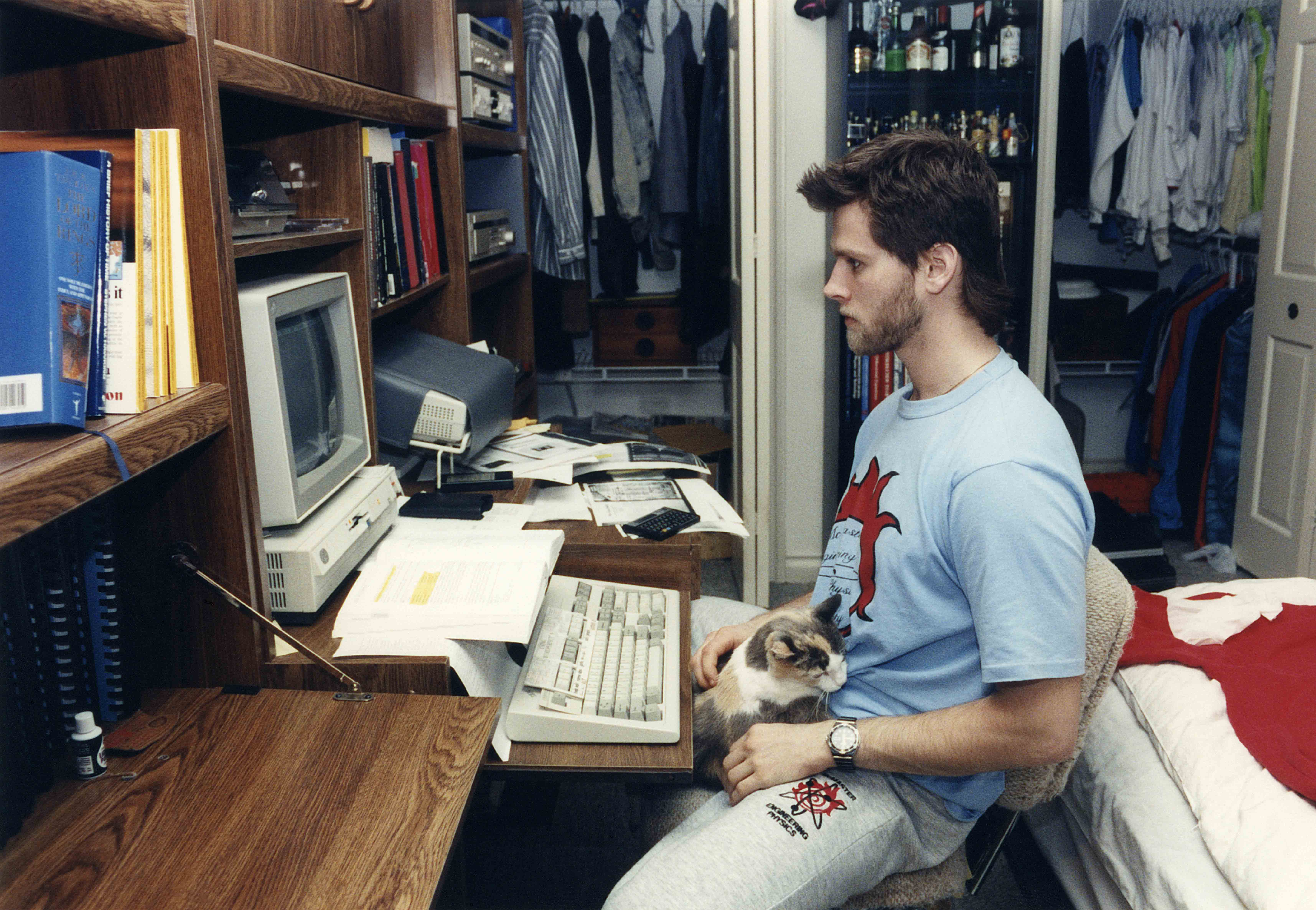
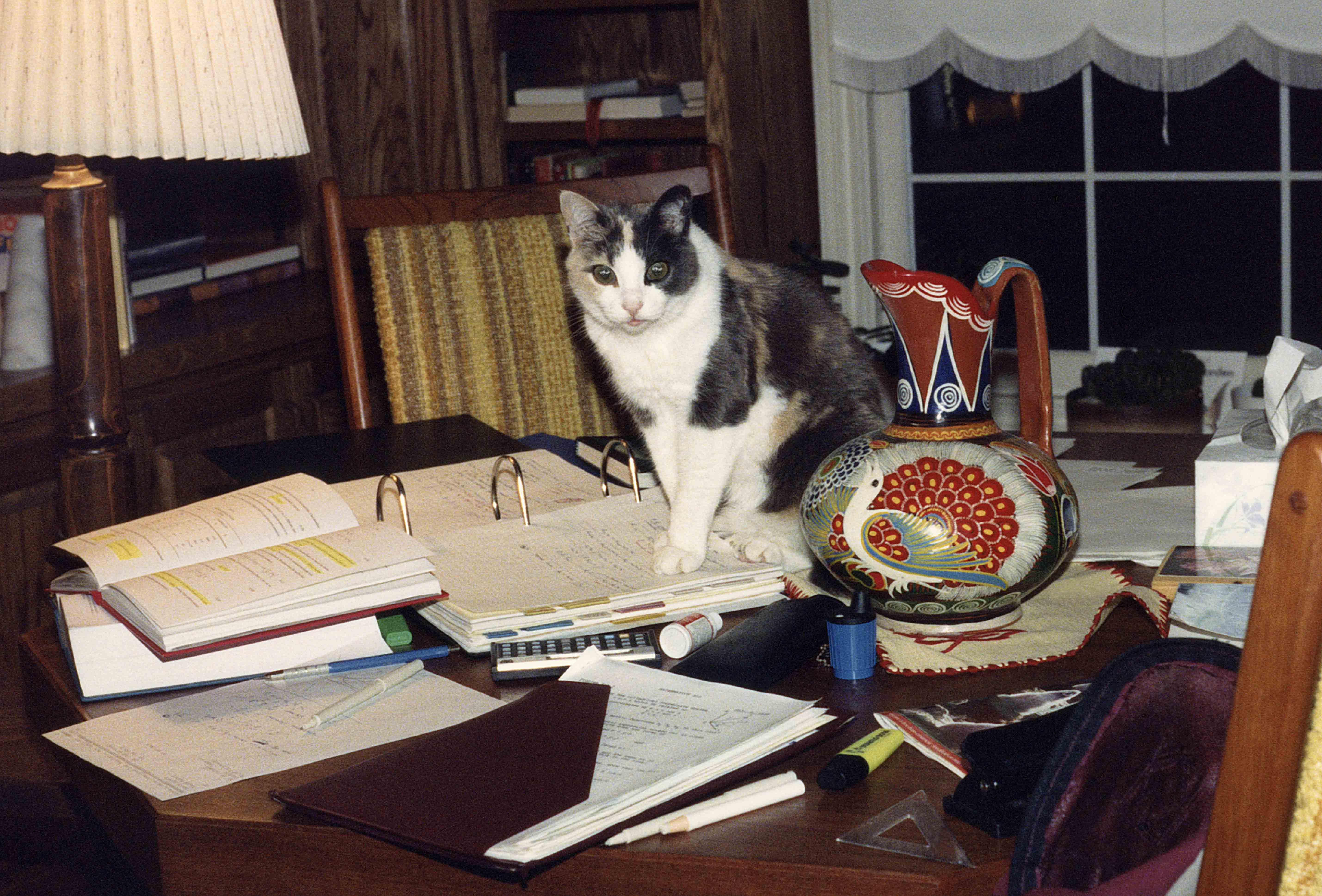
• Postscript by Gabriel Dusil • 2015 April • This was our daily routine throughout my university years. I was studying and working on labs and reports on my IBM PS2, and Inchy cuddled with me everyday day.
89.Nov – Burlington · Inchy & Gabriel Dusil (studying w. Inchy)90.Nov – Burlington · Inchy Dusil (studying with Gabriel)90 – Burlington · Inchy Dusil (studying with Gabriel)
• Postscript by Gabriel Dusil • 2015 April • If I wasn’t in front of the computer, I was in the library studying. Inchy was particularly good in helping me with special relativity, but she didn’t quite have a grasp of thermodynamics. In any case we were a great study team.
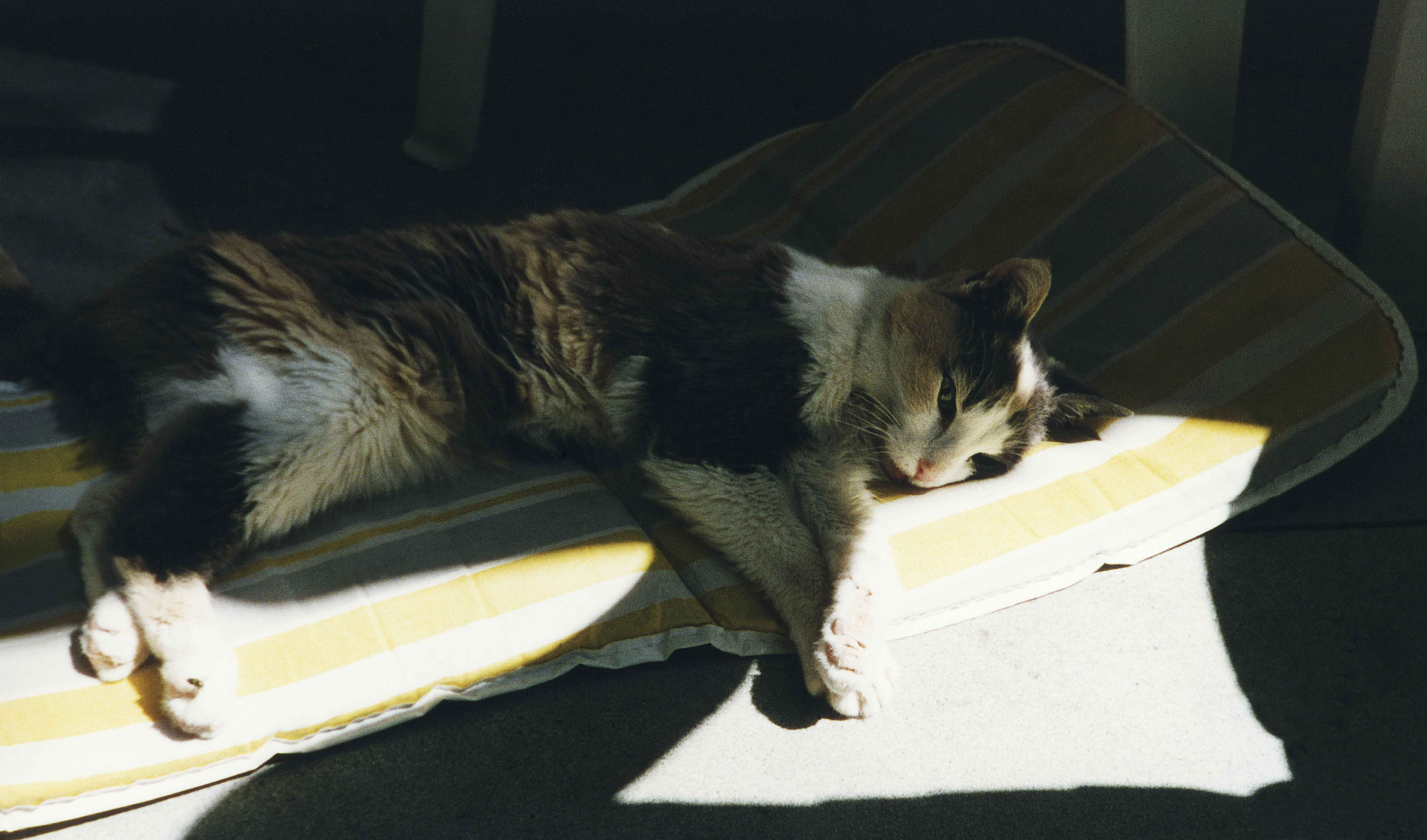
• Postscript by Gabriel Dusil • 2015 April • This is the last picture we have of Inchy. She died a few weeks later. My mom saw her outside, and brought her in. By this time she was deaf and very weak.
• Story by Eva Dusil • Editing by Gabriel Dusil • 2014 November
• When I was nine years old we went to visit my relatives in Košice. At the end of their huge garden were military barracks. Curiosity compelled me to climb a concrete wall hiding the surprise that was waiting for me on the other side. I saw what I adored the most – horses! Soldiers that were tending the sables came over and we began to chat. On subsequent visits I spent time with them as they maintained the stables. I soon became a regular visitor. The soldiers warned me that if an officer inquired of my present I should tell them I’m the daughter of a soldier from another barracks. They didn’t want to get into trouble.
• When my mother eventually found out, she was concerned that a young girl was among strange teenage military boys. It wasn’t appropriate. So when I turned eleven she decided to enroll me in the city’s equestrian club. My mother lied about my age since I needed to be at least twelve. The horses from the military barracks had since been sold to the Košice equestrian club, because that military division shut down. So I ended up riding the same horses.
• It was the summer of 1957, and in those days very few girls were riding. It was considered a man’s sport and I was one of only three girls. Being the youngest made it even harder. I was endlessly bullied and intimidated by the boys. Even today I wonder how I had the strength to stand up to them. The regiment of riding and taking care of horses was fierce, and was managed in a military fashion. Competition was relentless, and the trainers were very strict. My parents were at least content knowing where I was spending my afternoons. Nevertheless, I still had to be home by eight o’clock, or I’d be in trouble. Those years certainly taught me discipline.
• Mamička
If you missed other Mamička posts, you can link to them here:













































 Gabriel Dusil • Time Is Relentless