To my pleasant surprise, Lenka called me a few weeks back asking if we could do another photo shoot. She wanted to showcase custom-painted jean jackets from the artist, Marion Vavrova and dresses by Meescha P. . You can check out her work on Facebook, or Instagram. Feel free to follow Lenka Rousková on Instagram.
Our shooting location was the Waldstein Gardens (aka. Wallenstein Garden or Valdštejnská zahrada) in Prague, Czechia. Here are the first 10 photos from our shoot. Enjoy!
Dusil Photography is dedicated to celebrating feminine beauty. Images throughout these pages capture a moment in time – grasping a model’s innocence, compassion, and strength. Each photoshoot hopes to reveal the model’s essence, and briefly glimpse into their soul.
Dusil Photography is dedicated to celebrating feminine beauty. Images throughout these pages capture a moment in time – grasping a model’s innocence, compassion, and strength. Each photoshoot hopes to reveal the model’s essence, and briefly glimpse into their soul.
• Today commemorates the 50th anniversary of our family’s emigration from former Czechoslovakia. It would also have been my dad’s 77th birthday. On this day in 1969, over a year had passed following the Soviet Union and members of the Warsaw Pact‘s illegal occupation of Czechoslovakia. Our departure would have been immediately after the invasion, but with my mother being eight months pregnant, my parents felt it would be safer to leave a year later.
• Our departure was shrouded in tremendous secrecy, with only the most trusted members of our family and friends knowing our plans. The local authorities could have found any minor excuse to prevent us from leaving the country. For this reason, I prefer to categorize our departure as an “escape”, even though we legally left the country with all the necessary paperwork.
• I want to thank my mother and father for their tremendous bravery and steadfast convictions in believing that we would have a better life in the West. Our departure may be the obvious choice in hindsight, but at the time, it could have been argued that there was no clear winner between the political doctrines of capitalism and communism. Two more decades were necessary to prove which was better. The collapse of the iron curtain and the end of the cold war at the end of the ’80s put a definitive stamp on that debate.
• When I was eight years old my father was driving me to our animal hospital where he worked as a veterinarian. During our drive, Taci decided to explain communism to me. I vividly remember him articulating the horrible regime from which we escaped, with a heavy heart. In these few minutes, he created a hypothetical analogy for my young mind to understand – “If Canada were to become a communist state, then our veterinary business and our house would be taken from us. In fact, every citizen in the country would not be allowed to own any business or property – the government would take ownership of everything. Even at eight years old this resonated with me. More importantly, I recall the sadness in his heart, while explaining this to me, because he had to leave behind many friends and family who continued under the repressive and totalitarian communist regime. As he took the final turn to the animal hospital he concluded by saying, “Unfortunately I will probably not live long enough to see the collapse of communism, but with any luck, maybe you will see it happen”. Both came to pass.
If you are interested in other posts of our emigration you can find their links here:
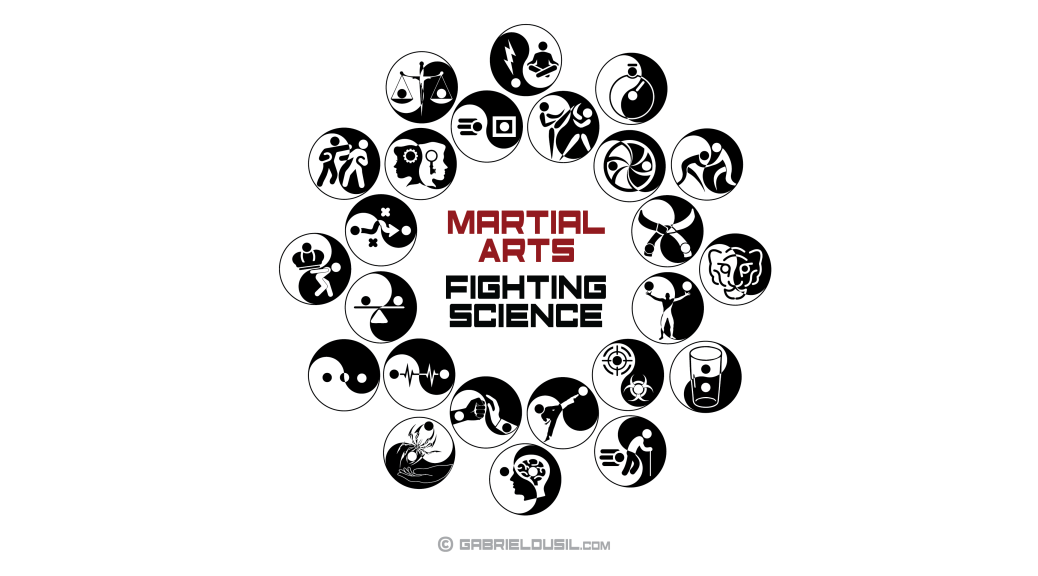
The full “Yin ☯ Yang of Fighting Science” series is now available online, in its entirety. We hope you had a chance to see many of the posts over the five months they were published. If not, then here is the entire series with hyperlinks, so that you can read those you missed. Enjoy!
Martial Arts • Fighting Science • bonus • Yin ☯ Yang
Each instructor has a different teaching methodology. As with any profession, some are good, and others are not. It may be that they were a great fighter, but aren’t good teachers. Or the reverse – they weren’t a great fighter, but are excellent teachers. A good instructor has the ability to convert an intuitive technique into instructions that students can clearly understand. If the instructor was a champion and has proven skills in combat, this holds weight against a bad communicator, even if they’re not great at knowledge transfer. Sometimes a student needs to recognize a teacher’s limitations – this may include a language or cultural barrier – and navigate themselves to the most effective synergy between teaching and learning.
Learning requires eternal humility and sidelined egos. Even teachers are forever students.
A student once said to me, “I was told in boxing that I need to look at the chin of the opponent, so why are you telling me to look at the center of the chest?” The reason is that in boxing the threat is only the opponent’s fists. In kickboxing, you need to be concerned with kicks as well. So peripheral vision becomes an additional asset to “see” both the hands and the feet. By focusing on the opponent’s chest, this represents a good ‘compromise’ to monitor all four attack vectors.
Another student asked, “How do I deal with an instructor who is teaching me a technique that I know is wrong?” My response in these situations is to explain that respect overrules correctness. I prefer that students always listen to the instructor. To look at a new technique as a dance. Even if you feel it’s wrong, try it anyway. Has your body moved that way before? Give your body a chance to try a new movement, and look at it as a challenge for that lesson. Afterward, look for a better trainer. Certainly, if the instructor is not knowledgeable or doesn’t have the ability to incrementally improve on the student’s abilities, then that club is a bad fit. The challenge is to find a teacher that can take each student to an improved skill level.
Students entering a gym for the first time is tied to a certain level of expectation. Does the student want to learn a new martial art? Do they want to learn how to fight? Is their goal to learn self-defense, and defend themselves in conflict? Do they want to learn self-discipline? Or is it simply to get into shape? Any of the above reasons could stand-alone, or have a combined motivation.
At a grassroots level, combat training is a form of self-torture – Repeatedly tormenting the body but wanting more – It’s not for the faint of heart.
I tell new students before their first practice, “One of two things will happen once this session is over; You’ll say to yourself, ‘that was one of the most brutal training sessions I’ve ever done, and I never do this again.’ or, ‘That was one of the most brutal training sessions I have ever done, but for some reason, I want to do it over and over again.’ Those are endorphins talking.
Who prevails when an “Unstoppable force meets an immovable object”? This philosophical riddle plays out when super-heavyweights enter the ring.
The first step in comprehending this enigma is to realize that we’re all human. No one is perfect. Every opponent has their strengths and weaknesses. It’s important to understand your opponent. One tactic may be for an opponent to maximize the perception of invincibility. It’s up to the opposing force to set aside fear, and separate reality from perception.
As humans, no one is perfect. Every opponent has strengths and weaknesses.
Next, is to realize that this riddle is negated by the fact that in a competition, only one fighter leaves a winner. No one is unstoppable or immovable. We are flawed sapiens and any illusion of invincibility is a facade.
About the Author
Gabriel Dusil has been a practitioner of Martial Arts for over twenty years. Originally he trained in the traditional style of Shotokan Karate. Gabriel has also trained under Sensei Martin “Sonic” Langley in the United Kingdom and currently trains with Karel Ferus in Prague at the Ferus Fitness Fight Club, fffc.cz. More recently he focuses on circuit training, strength & conditioning, and kickboxing.
The brain is the most powerful organ in the body. It makes us who we are and gives us the gift of sentience. The brain also controls our muscles. In a fight, an attack is observed by the eyes, ears, or other senses – then interpreted by the brain, which tells our muscles how to react and defend itself.
The natural instinct of humans is to close their eyes when being attacked. This reaction is due to fear. But when a fighter’s eyes are closed their brain can’t make informed decisions. This instinctive reaction is counterproductive in the sense that the body can’t compensate for an attack if it can’t see it. A surprise attack, for example, is much more devastating than an anticipated one. When the body has a chance to react, then selected muscles can be called upon to react and protect itself. This is not to say that zero damage will occur. It just means that a fighter may need to choose between the lesser of two evils: “I will allow my arm to be broken to protect my head from a concussion.”
Our head, and specifically our brain needs to be protected at all costs. Even if it means sacrificing other parts of our body. The main dilemma in fighting (and sports that are prone to a concussion) is that the brain does not have any pain receptors. Injuries to the head are not immediately recognized by the victim as urgent. Often a third party is needed to recognize this urgency. For this reason, fighters and trainers need to be particularly careful with head strikes, which may lead to serious injury or even permanent brain damage.
Martial Arts • Fighting Science Series
If you would like to read more articles in this “Yin Yang of Fighting Science” series, check out these posts:
One aspect of fighting is knowing your opponent’s weaknesses. But those weaknesses are not always apparent. Formulating a winning strategy before a match is an effective approach to understanding an opponent, but that convenience is not always available. In a surprise circumstance, assessing a situation in real-time may be required.
One approach is to judge an opponent’s strengths and weaknesses on appearance alone. Although “judging a book by it’s cover” is not always wise, it may be the only recourse. For instance, assessing a muscular opponent may assume good grappling skills – Avoiding a ground conflict may be paramount. A tall fighter will likely have a “reach advantage”, meaning that the length of their limbs are longer than yours. This means they can hit you, even if you can’t hit them – In this case, combinations and movement will be required to duck under the opponent’s punches for a counter-attack. A smaller fighter, on the other hand, will typically have shorter limbs and will want to get “inside” to connect their strikes or grab for a take-down. Formulating strategy is fundamental to combat sports. We cover this topic in more detail here: Martial Arts • Fighting Science • Fighting Zones
Compared to strategy, tactics are more immediate and specific. These focus on mitigating an opponent’s granular reactions and exploiting their technical weaknesses. For example, a fighter may drop their hands when they kick – This can be exploited with a well-timed strike to the head when they attack with a kick. The opponent may have a tendency to lean back when facing a jab – Rushing them will put them off balance. The fighter may hold their breath when they are attacked. This physical reaction is often caused by fear or inexperience. Moreover, holding breath results in getting tired much faster. With this opponent, surviving an initial onslaught and waiting for the opponent to be exhausted may be an effective tactic.
A fighter may hide their weaknesses by pouncing early, not giving the opponent a chance to introspect.
Professional fighters often have the luxury of formulating strategy and tactics before a competition, because they can review an opponent’s previous fights and analyze their strengths and weaknesses if footage exists. Without such content, a strategy may need to be formulated in real-time, in the first seconds or minutes of a fight. Once an opponent has been engaged, their capabilities are clearer.
Martial Arts • Fighting Science Series
If you would like to read more articles in this “Yin Yang of Fighting Science” series, check out these posts:
There are three key assets to a good fighter: strength, conditioning, and technique. In the latter function, an overarching aspect of a fighter’s portfolio is its stability. But stability is not realistically achievable all the time in a fight. The goal at least is to maintain or return to stability as soon as possible.
Each martial art approaches stability from a slightly different perspective. In kickboxing or boxing, stability begins with “guard” – with hands covering the face, and a square stance. Through offensive and defensive movements, this stance becomes “home base”. But a square stance is not always practical in every attack. For example, as when performing a spin kick or spinning back-fist – the mere fact that the fighter is rotating on one leg diverges from their stability. Regardless, after the attack, their goal is to return to “guard” and stability.
In a fight, risks are taken to create or capitalize on opportunities.
Not all styles have the same philosophy toward stability. For example, Taekwondo fighters will stand sideways to an opponent in a linear stance. This is mainly due to the dominance of their kicking portfolio. A Karateka will have a very wide stance, compared to a boxer. Muay Thai fighters, on the other hand, choose to lean back on their hind legs so that they can utilize kicks with their lead leg (i.e. their forward-facing leg), or block leg kicks.
Stability can be learned through slow-motion techniques. Kicking fast has a tendency to mask instability or mistakes. If a fighter can execute a kick slowly, and maintain stability throughout – this demonstrates strength, technique, and accuracy.
Martial Arts • Fighting Science Series
If you would like to read more articles in this “Yin Yang of Fighting Science” series, check out these posts:
A challenging aspect of combat training is explaining to a student that repetition is needed to learn, but that same aspect needs to be eliminated in a fight. It seems to be counter-intuitive to teach the importance of repetition to the point that it is eliminated.
Students need to learn a technique until it becomes ingrained in muscle memory. I write about this in the 100-1000-10000 rule. The goal of learning a new technique is to make that move integral to the student’s repertoire (see Martial Arts • Fighting Science • 3 • Yin ☯ Yang of Fighting Styles). Reaching this goal requires dedication, patience, and time. Many students will barely reach 100 repetitions in a single lesson, let alone the 10000 needed to reach one’s subconscious.
Fighting requires random and unpredictable behavior. The more unpredictable a fighter, the harder it is to anticipate their attacks. That aside, repetition can be used as a fighting tactic – punching in the same spot over and over lull an opponent into a false sense of predictive behavior. Once this goal is achieved then the next attack can be completely different.
Any predictive behavior is a weakness waiting to be exploited
Beginners adopt repetition to no fault of their own. They are taught to repeat moves until they understand their mechanics – then continue repeating them until it becomes a part of their being. Predictive behavior needs to be recognized and avoided. For example, students have a tenancy to alternate when they spar: first, one attacks and the other defends – then they switch. Recognizing repetition and embracing randomness requires experience. Sparring with different opponents with different skill sets helps to open a fighter’s eyes to different styles and timing methodologies. A beginner facing a new style may result in panic or uncertainty. This reaction negatively manifests into body-freezing, not knowing how to defend against the unknown. This is why exposing a fighter to different spokes in the Expertise Wheel helps them to learn effective counter-strategies. Examples of unknown territory may include:
A Fighter’s Physiology • Tall, short, heavy or strong fighters
Mysterious Martial Styles • Unseen techniques, timing, or bizarre behavior
Street Fighting • No rules means that attacks can come from unexpected angles or even weapons.
Each scenario requires different tactics to mitigate an opponent’s strengths and capitalize on their weaknesses. Here are some examples:
Tall and lanky fighters • A fighter needs to close the distance to mitigating the opponent’s reach advantage. If the fighter has experience with wrestling or jiu-jitsu then taking them to the ground will mitigate the opponent’s height advantage.
Short and stocky fighters • Tactics here may involve keeping the fight standing, based on the assumption that their strength in grappling. This means mitigating this threat by learning how to counter takedowns.
Muay Thai • Fighters should avoid “phone booth” fighting against these opponents since Muay Thai fighters are especially versed in the clinch. They are also experts at leg kicks. Ground fighting will also eliminate all Muay Thai strengths.
Karate-ka • Fighting these opponents in the phone booth is ideal since they are unfamiliar with close-range fighting. This martial art focuses on block and counter techniques so using multiple combinations, executed by a boxing style is a good tactic since it results in quick ascension to the opponent’s Chaos Zone.
Wrestlers • It is important to keep the fight standing with these opponents. The main hope on the ground is superior wrestling or Brazilian Jiu-Jitsu.
Boxers • These fighters are especially versed in combinations and dancing around their opponents. It is important to use kicks to keep them out of the “phone booth” range. If this happens, then a Muay Thai clinch will mitigate a boxer’s strengths since they are unfamiliar with tactics that involve grabbing and grappling. Boxers are used to being separated from a clinch, but Muay Thai fighters will continue fighting. In many cases, taking a boxer to the ground is the best option.
Martial Arts • Fighting Science Series
If you would like to read more articles in this “Yin Yang of Fighting Science” series, check out these posts:
Motivation to train varies by student. Some need to vent their aggression. Some want to exercise. Others are attracted to the competition. Police officers are trained to protect themselves from the violence exposed by their profession. A street fighter may be driven by emotional issues or adrenaline. When I meet new students for the first time I try to understand their underlying motivation. Are they training to get into shape? Do they want to better defend themselves or fair well in a bar-room brawl? Sometimes it’s not a clear-cut division.
Fighting is fundamentally a combination of violence, sport, and art:
A competitive fighter will focus on the sports aspect, wanting to learn skills so they can win in a competition.
A violent fighter’s goal is to hurt their opponent.
A martial arts practitioner wants an outcome where they will not get hurt, and even try to settle the altercation without severely hurting their opponent.
In a combat situation, understanding an opponent’s motivation is important. A street fighter facing a martial artist is a conflict of diverging motivations: The martial artist wants to leave the conflict causing minimum harm while the street fighter wants to inflict maximum harm.
Violence is a mixed bag of anger, fear, and heightened emotion. Martial Arts concentrate on the skill, composure, and technique.
Students who are motivated by self-defense typically won’t stick with training for long. They find themselves leaving after a short time, once they’ve learned enough self-defense to satisfy their minimum requirements. Most violent confrontations are the result of being in the wrong place at the wrong time. Practitioners of Krav Maga such as police officers, bouncers, or bodyguards – are often situated in the wrong place and at the wrong time. A majority of society will not see such violence if they avoid locations where violence occurs. In other words, training for an altercation that is unlikely to occur in one’s lifetime is not a reasonable objective. Spending years training for a chance encounter is not a good balance of one’s personal investment against personal risk.
Martial Arts • Fighting Science Series
If you would like to read more articles in this “Yin Yang of Fighting Science” series, check out these posts:





































































 Gabriel Dusil • Time Is Relentless